

“One of the most heroic things anyone can do is break the line of hurt. When people heal themselves, they stop the hurt from multiplying and their relationships become healthier. When people heal themselves, they also heal the future.”
ADHD is one of those topics that’s often talked about loudly, but understood quietly, if at all.
Many people live with its effects for decades before they have language for what they’re experiencing. By then, self-blame has usually taken root.
I’ve been wanting to revisit this piece for a long time. I first wrote about ADHD years ago, and recently felt called to rewrite it. Not to change the message, but to offer it with more clarity, softness, and lived perspective.
This article is for adults who have always felt “off,” for partners trying to understand someone they love, and for anyone who has mistaken nervous system differences for personal failure.
Take your time with it.

🐼A Note from Me Before We Begin
Hi, I’m Jessica.
I wrote this piece with someone I love in mind.
ADHD is still one of the most misunderstood conditions I see, especially in adults who have spent years blaming themselves for struggles that were never about intelligence, effort, or discipline in the first place.
ADHD doesn’t just affect attention. It affects energy, impulse control, emotion, time perception, and the nervous system’s ability to regulate under pressure.
For many people, understanding this later in life can feel both relieving and unsettling at the same time.
This article isn’t meant to label or pathologize.
It’s meant to offer clarity, compassion, and language for experiences many people have lived with quietly for years.
My annual winter vibes playlist for 2026 is now out Spotify!!
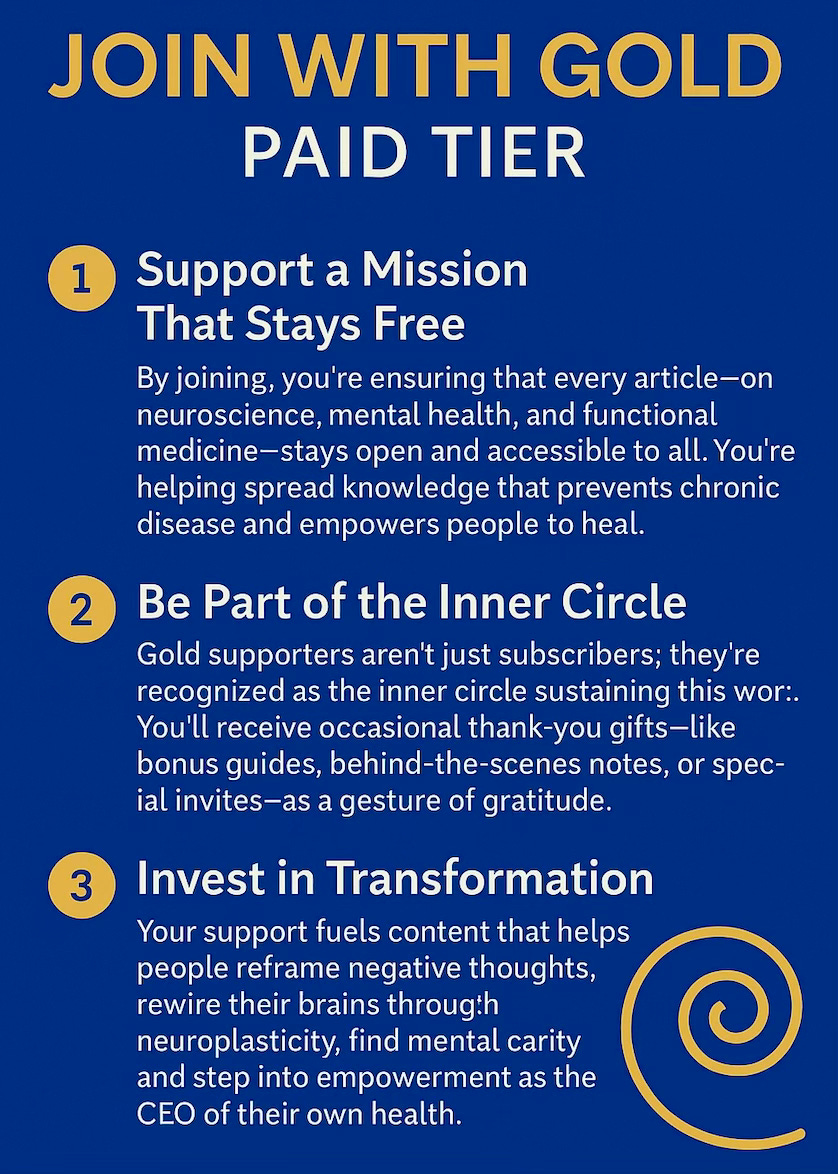
🌀 The NP Fellow Sunday articles will always be free and remain open and accessible to everyone.
For readers who want a deeper, more practical layer, I’ve created Weekly Skills—short, grounded practices designed to help you build self-trust, emotional steadiness, and nervous-system resilience week by week.
If you’d like to support the work and access the Weekly Skills, you can Join with Gold below!

What Is ADHD, Really?
Attention-Deficit/Hyperactivity Disorder (ADHD) is a neurodevelopmental condition that affects executive functioning, which is the brain’s ability to regulate attention, impulses, organization, motivation, and time.
Although ADHD is often associated with hyperactivity, it doesn’t always look that way.
In many adults, hyperactivity becomes internalized and shows up as restlessness, anxiety, constant mental activity, or difficulty slowing down rather than obvious physical movement.
ADHD affects people of all ages and genders.
It begins in childhood and persists into adulthood, influencing school, work, relationships, and self-esteem.
Challenges with staying focused, managing time, and regulating attention can lead to frustration, emotional reactivity, and burnout especially in environments that aren’t designed for how the ADHD brain works.
A Quick Note on Hyperfocus
One of the most misunderstood aspects of ADHD is hyperfocus.
While people with ADHD may struggle to engage with tasks that feel boring or unrewarding, they can enter periods of intense, sustained focus when something genuinely interests them.
During hyperfocus, distractions fade, time disappears, and creativity flourishes.
This isn’t a contradiction. It’s a feature of how the ADHD brain is wired.

What Causes ADHD?
There’s no single cause of ADHD.
Research suggests it develops from a combination of genetic, biological, and environmental factors.
ADHD often runs in families, though symptoms vary widely from person to person.
Associated factors include:
Differences in brain development and function.
Prematurity.
Early brain injury.
Prenatal exposure to stress or toxins.
Childhood trauma can produce ADHD-like symptoms, but it isn’t considered a direct cause of ADHD.
What’s Happening in The Brain?
At a neurochemical level, ADHD is often associated with lower availability of dopamine and norepinephrine.
These neurotransmitters are involved in:
Motivation.
Focus.
Reward.
Decision-making.
When dopamine signaling is inefficient, the brain struggles to sustain effort on tasks that don’t feel immediately rewarding.
This can lead to constant seeking—stimulation, urgency, and novelty—not because of a lack of willpower, but because the brain is trying to regulate itself.

How ADHD Shows Up Across The Lifespan
ADHD symptoms often change with age and may become less visible, but they don’t necessarily become less impactful.
Children may show:
hyperactivity
impulsivity
difficulty following instructions
academic struggles.
Adolescents may experience:
inner restlessness
emotional reactivity
difficulty with planning and organization.
Adults often report:
chronic overwhelm
time blindness
procrastination
impulsive decisions
difficulty sustaining focus
low tolerance for stress (distress intolerance)
Women and girls are more likely to present with inattentive symptoms rather than overt hyperactivity, which contributes to underdiagnosis and later-in-life identification.
In recent years, there has been growing recognition of ADHD in adults, especially in women, who were overlooked in childhood because their symptoms didn’t match the stereotype.
Many are diagnosed later in life after years of anxiety, burnout, or chronic self-criticism.
ADHD isn’t new. Our understanding is finally catching up.
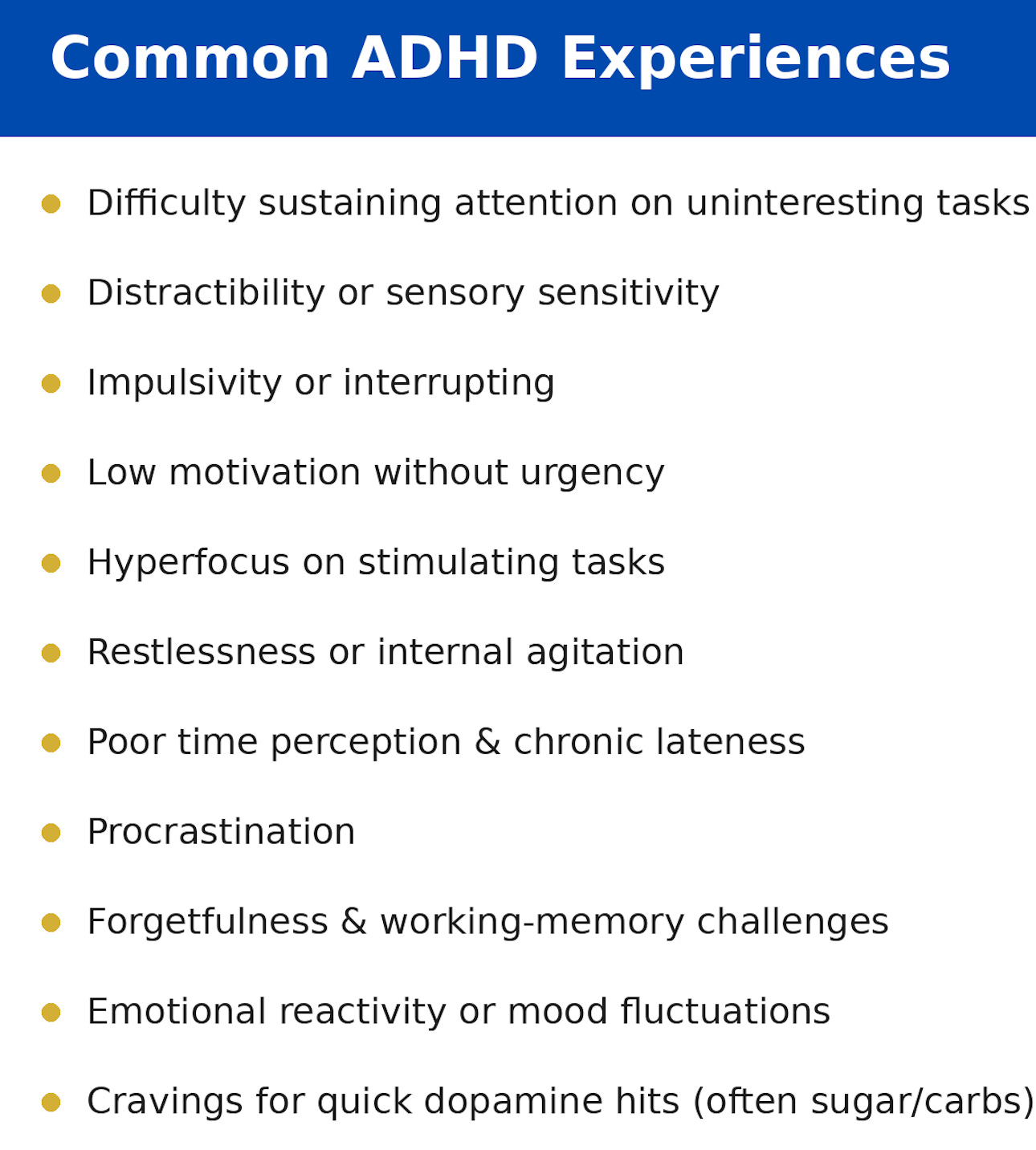
Not everyone experiences all of these, and severity varies.
If these patterns are interfering with daily life and you’re not currently working with a mental health professional, seeking evaluation and support is very important.
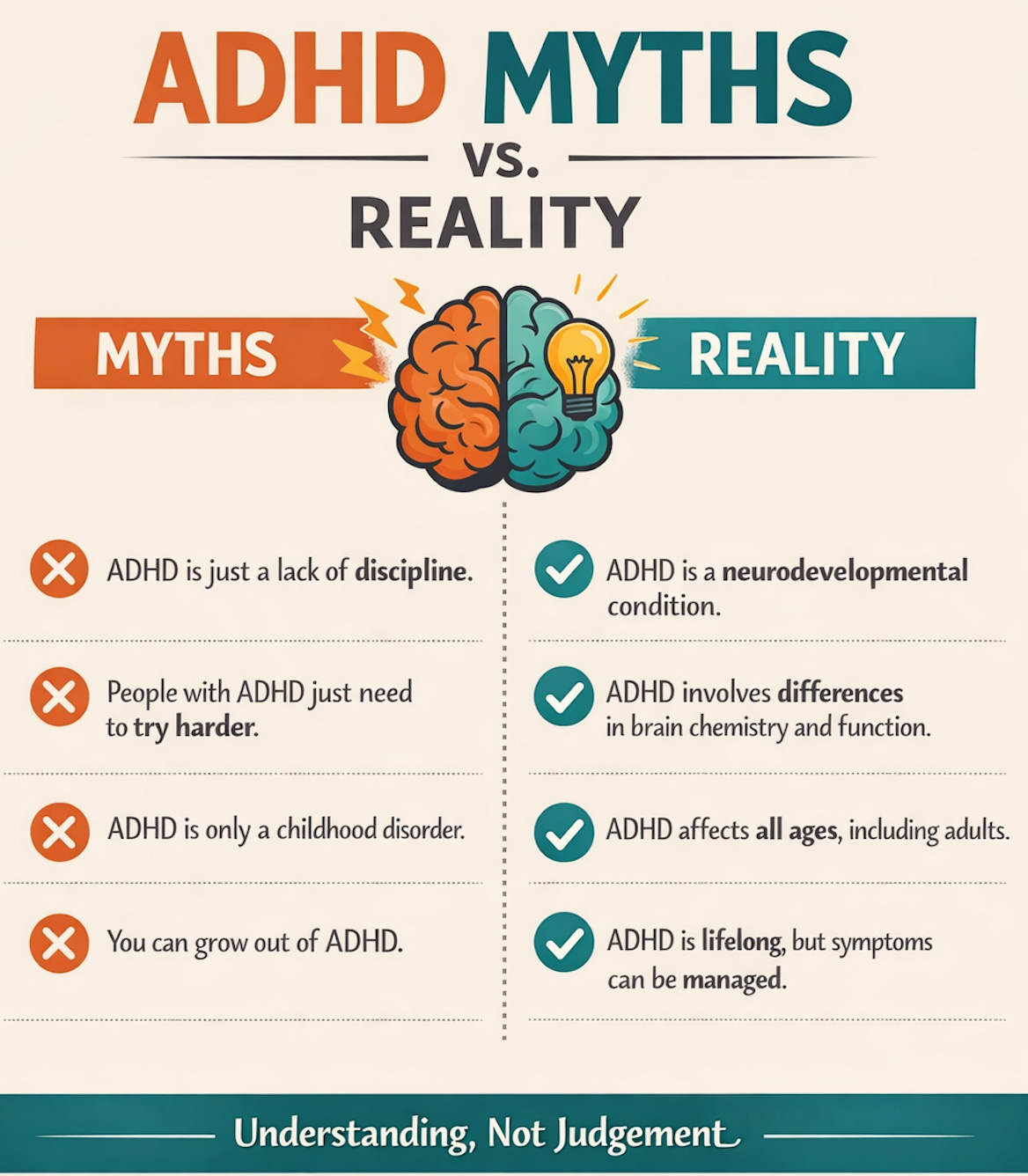
What ADHD Is Not
ADHD is often misunderstood and those misunderstandings can be more damaging than the symptoms themselves.
ADHD is not:
a lack of intelligence.
a motivation problem.
laziness or poor discipline.
a character flaw.
something people “grow out of” by trying harder.
ADHD is a difference in how the brain regulates attention, motivation, and mental energy.
Many people with ADHD are highly capable, creative, and insightful, but struggle in environments that demand sustained attention without adequate stimulation or flexibility.
When ADHD goes unrecognized, people internalize failure. When it’s understood, they can begin building systems that actually work for their brain.
How ADHD Is Diagnosed
ADHD is diagnosed by a qualified mental health professional, such as a psychiatrist or psychologist.
Diagnosis involves a comprehensive evaluation that considers medical history, symptom patterns, and functional impairment across multiple settings.
Symptoms must be present for at least six months and exceed what would be expected for someone’s developmental stage.
A proper evaluation also helps distinguish ADHD from anxiety, depression, trauma-related conditions, or burnout, which can overlap in presentation.

ADHD Treatment and Support
ADHD treatment is highly individualized and often includes a combination of medication, therapy, and lifestyle support.
Medication
Stimulant medications (such as Adderall or Ritalin) increase dopamine and norepinephrine availability and can improve focus and impulse control.
They can be effective, especially in children, but require careful monitoring due to cardiovascular risks and misuse potential.
When used appropriately, medication can support the development of attentional skills through neuroplasticity, helping individuals learn regulation strategies that may persist even if medication is later discontinued.
Therapy
Psychotherapy, particularly cognitive behavioral therapy (CBT), helps individuals build practical tools for organization, time management, emotional regulation, and self-compassion.
Lifestyle Foundations
Movement, nutrition, sleep, and structure aren’t optional extras; they’re foundational.
ADHD brains are especially sensitive to sleep deprivation, blood sugar instability, and chronic stress.
Supportive Habits That Help
Regular movement: improves dopamine signaling and executive function.
Fidgets and sensory input: help regulate excess energy.
Reduced added sugars: especially helpful for children.
Visual focus training: strengthens attentional circuits when paired with movement.
Mindfulness or meditation: even brief daily practices support focus and emotional awareness.
Sleep: ADHD brains often need more rest, not less.

Final Thoughts
ADHD exists on a spectrum, and it can be difficult to define where everyday distraction ends and clinically significant impairment begins.
What matters most is this: ADHD isn’t a personal failure.
While it brings real challenges with focus, organization, impulse control, and time, ADHD it also comes with strengths and real advantages when properly supported.
Creativity.
Intensity.
The ability to hyperfocus on meaningful work.
Understanding ADHD doesn’t fix everything, but it often brings relief, hope, self-trust, and a starting point for real support.
If you or someone you love is struggling, help is available.
You don’t need to wait until things feel unmanageable or you’re suffering to seek support.
If you or someone you know is in crisis, call or text 988, or visit 988lifeline.org for immediate help.
Thank you for reading this article.
Until next Sunday,
—Jessica
Your 2am friend who actually gets it
“Progress is acknowledging where you are and where you want to be without allowing the space between the two to cause you mental tension. If anything, it should inspire you to continue moving forward peacefully and diligently. Having goals without attachments produces faster results.” —Yung Pueblo

🪩 A Gentle Invitation
If this article resonated with you, you may appreciate my new product called Weekly Skill, a paid NP Fellow series focused on one real, grounded internal skill each week regarding attention, distress tolerance, emotional regulation, presence, and learning how to work with your nervous system instead of against it.
No pressure. Just an invitation.🤝
🚨My new podcast NP Fellow Collective is now live on Spotify!
Recent Articles👩⚕️✍️
We Struggle and Succeed Together

“Real maturity is observing your own inner turbulence and pausing before you project how you feel onto what is happening around you.”

Why We Weren’t Meant To Regulate Alone

“A fresh start begins with forgiveness and trust is greatly deepened when changed behavior becomes consistent.”
Looking for Quick, Mindful Workouts to Elevate Your Fitness Routine? 👇⏰💪
Check out my ebook, A Pocket Book of Express Mindful Workouts, designed to help you seamlessly integrate daily movement into your modern life.
This ebook features 20 express, mindful workouts, each just 17 minutes long, making it easy to stay active wherever you are—whether at home, in a hotel, or even outdoors.

An Express Mindful Workout combines physical movement with mindfulness, focusing on maintaining proper form and controlled breathing.
These quick routines will test your mental toughness, improve cardiovascularfitness, and build muscle strength, all while helping you develop a consistent daily workout practice.
Best of all, you can download the ebook instantly and carry it with you wherever you go.
So, no matter how busy your schedule, you’ll always have time to get moving!!
MEDICAL DISCLAIMER
This content is for informational and educational purposes only. It is not intended to provide medical advice or to take the place of such advice or treatment from a personal physician. All readers/viewers of this content are advised to consult their doctors or qualified health professionals regarding specific health questions. All viewers of this content, especially those taking prescription or over-the-counter medications, should consult their physicians before beginning any nutrition, supplement or lifestyle program.
Great breakdown of ADHD and its complex presentation.
Thank you for writing about this! My brother got ADHD and I find this content really helpful ❤️