


🩵A Note from Me
Hi, I’m Jessica.
I write NP Fellow, a weekly mental health and functional medicine newsletter, to help readers build emotional regulation skills, gain mental clarity, prevent burnout, and become the C.E.O. of their own health.
Last week, I asked readers a simple question:
“If money and job titles didn’t exist, what would you contribute?”
Hundreds responded within hours.
“Teaching kids to read.”
“Building solutions for people who feel stuck.”
“Writing words that make someone feel less alone.”
“Creating safety where people can finally come home to themselves.”
They knew their purpose. They could articulate it in one sentence, but when I followed up and asked, “Are you doing it?”, the answer was almost always the same.
“Not yet.”
“Someday.”
“When I have time.”
“When I’m financially free.”
After I retire.
Here’s the problem: 83% of workers now rank work-life balance above compensation for the first time in history, balance has overtaken pay as the top priority.
People are waking up to the fact that waiting 40 years to live with purpose doesn’t work, but they’re stuck between knowing what matters and actually doing it.
This article introduces The Bridge Method—a 4-phase system for building your purpose alongside your job, not after it.
You’ll learn how to start with 20 minutes a week, test whether your purpose is sustainable or romanticized, and make the transition (if you want to) without blowing up your financial stability.
You don’t have to choose between security and purpose. You build the bridge while you’re still on solid ground.
My annual winter vibes playlist for 2026 is now out Spotify!!
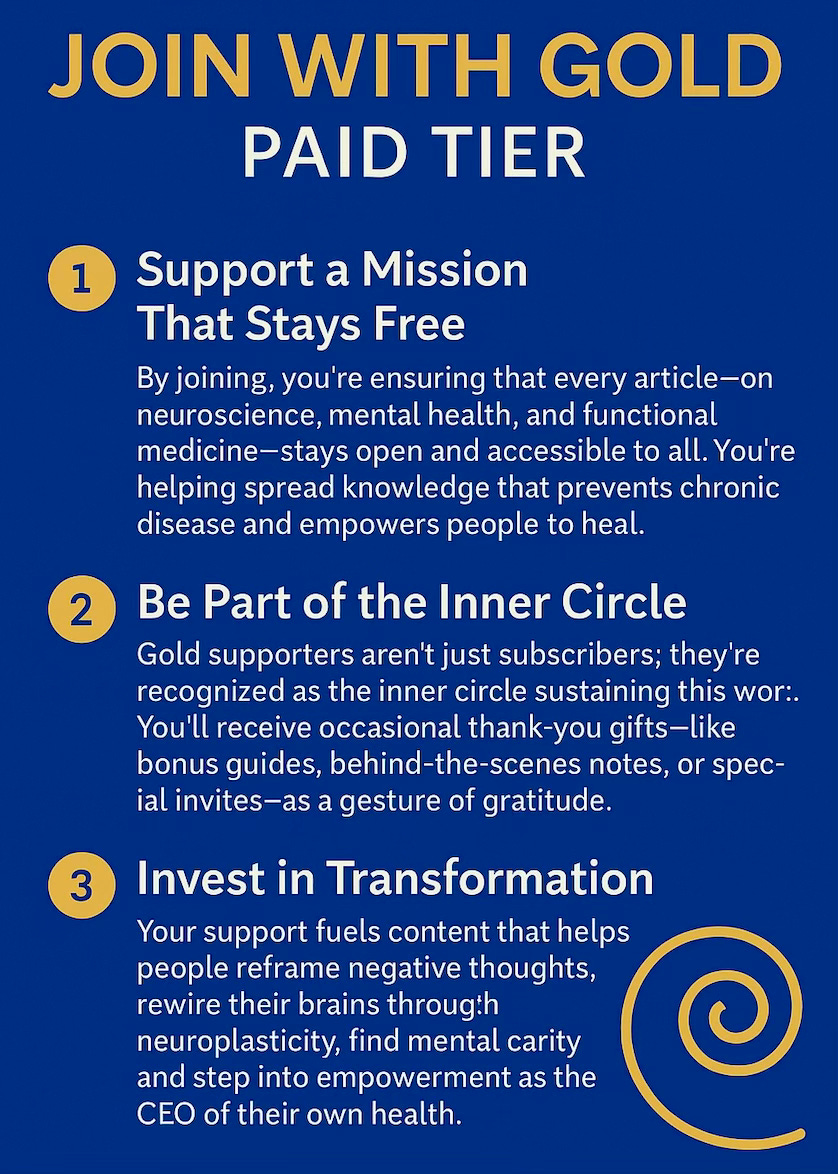
🌀 The NP Fellow Sunday articles will always be free and remain open and accessible to everyone.
For readers who want a deeper, more practical layer, I’ve created Weekly Skills—short, grounded practices designed to help you build self-trust, emotional steadiness, and nervous-system resilience week by week.
If you’d like to support the work and access the Weekly Skills, you can Join with Gold below!

The Gap Between Knowing and Doing
You answered the question.
You know what you’d do if money didn’t matter, but you still show up to a job that has nothing to do with it.
The average American worker changes jobs 12 times over their career. Career transitions are now common across all sectors and life stages.
People are moving, pivoting, and reinventing themselves constantly. This is the norm now, not the exception; however, most people wait too long.
They hope for the “perfect moment.”
Financial freedom.
Kids graduating.
One more promotion.
Retirement.
The perfect moment never comes. So they spend decades knowing what they want to do, but never doing it.
Blue Zones centenarians never waited. They wove purpose into their daily lives from the beginning.
They gardened because it mattered to them.
They mentored because passing on knowledge felt good.
They built things because creating with their hands gave them a reason to wake up.
They didn’t separate “work” from “purpose.” It was always integrated.
The question you’re asking is the wrong one.
You’re asking, “Should I pursue my purpose?”
The real question is: “How do I start now without destroying my stability?”
Why Most People Stay Stuck (And It’s Not What You Think)
You’re not stuck because you’re lazy. You’re stuck because of identity conflict.
You’ve built an identity around your current job title and income level.
Nurse.
Attorney.
Engineer.
Manager.
Teacher.
That’s who you are. Changing that feels like losing yourself.
Professional identity represents the core sense of self within occupational contexts, and career transitions challenge individuals to reconcile their existing professional self-concepts with new role requirements and career directions.
Your brain interprets identity shifts as threats to stability.
The fear is: “Who am I if I’m not this?”
And here’s what the research shows: Up to 40% of professionals experience identity conflicts during significant career transitions.
This is normal.
You’re not broken.
You’re human.
Career transitions bring uncertainty, stress, identity shifts, and difficult decisions.
Most people need a 6-month buffer savings and a gradual transition plan to avoid burnout or financial collapse.
But here’s the shift: you’re not abandoning your identity. You’re expanding it.
You can be a nurse and someone who teaches.
An attorney and someone who writes.
An engineer and someone who builds furniture on weekends.
The Bridge Method helps you test, build, and expand without gambling your stability.

The Bridge Method: A 4-Phase System for Living Your Purpose Without Quitting Your Job
This is how you answer the question “What do I do now?” after you’ve identified your purpose.
No dramatic resignations.
No gambling with your mortgage.
Just systematic progress over 12 months that gives you real data about whether your purpose is sustainable and whether you want to keep building it.
Phase 1: The 20-Minute Commitment (Weeks 1-12)
Start ridiculously small.
20 minutes per week doing the thing you said you’d do if money didn’t matter.
If your purpose is teaching → teach one person one thing.
Write a post.
Record a 3-minute video.
Answer someone’s question in a forum.
If your purpose is creating → make one thing with your hands every Sunday morning.
Build something.
Draw something.
Write something.
If your purpose is building solutions → sketch one idea.
Build one prototype.
Solve one small problem for someone.
This phase has nothing to do with results. You’re not trying to make money. You’re not trying to go viral.
You’re building identity through repeated action.
Long-term potentiation occurs when repeated action strengthens neural pathways.
Consistency hardwires mastery.
Your brain becomes faster at what you focus on.
Identity-based habits (”I’m someone who shows up for this”) outperform motivation every single time.
Track one thing: Did you do your 20 minutes this week? Yes or no.
Nothing else matters yet.
After 12 weeks, you’ve practiced your purpose 12 times. That’s 12 more times than most people who are “waiting for the right time.”
And here’s what happens: your brain stops seeing it as foreign. It becomes part of who you are.

Phase 2: The Skill Audit (Weeks 13-24)
Now that you’ve practiced for 12 weeks, assess what you’re missing.
What skills does your purpose require that you don’t have yet?
If you want to teach online, but you’ve never edited a video—learn basic video editing.
If you want to build furniture, but you don’t know joinery—take a woodworking class.
If you want to write, but you’ve never published anything publicly—publish 12 pieces over the next 12 weeks.
Research on career transitions shows successful shifts require bridging skill gaps while still employed.
Identify 2-3 key skills.
Find low-cost ways to build these skills (online courses, mentorship, YouTube tutorials, practice).
Continue your 20-minute weekly commitment while upskilling on the side.
This phase tests whether your purpose is sustainable or just romanticized. If you hate it after 12 weeks of actual practice, that’s valuable data. Better to find out now than after you’ve quit your job.
Most people who “follow their passion” skip this step. They quit based on a fantasy, not evidence. Don’t do that.
Financial note: Keep your day job. This phase should cost less than $500 total.
Phase 3: The Income Test (Weeks 25-52)
Can you make $1 from your purpose?
Not $10,000. Just $1.
Offer your service to one person.
Sell your product to one buyer.
Monetize your skill in the smallest possible way.
This tests whether other people value what you’re building; not just you.
If you can make $1, you can make $100. If you can make $100, you can make $1,000.
Approximately 77% of career changers report earning the same or more within two years of making the switch.
But the ones who succeed? They test market demand before quitting. They replace income gradually, not all at once.
80% of side hustlers report feeling more financially secure because of their additional income stream, with nearly one in four bringing in $500–$1,999 monthly.
During this phase, save a 6-month buffer fund if you’re considering eventual full transition.
45% of Americans now have a side hustle and this is how they’re building financial resilience while testing new paths.
Your day job is funding your purpose. That’s not failure. That’s strategy.
By week 52, you’ve practiced your purpose for a full year, built skills, and tested market demand. You have evidence, not fantasy.

Phase 4: The Decision Point (Month 13+)
After 12 months, you have real data.
Do you still want this?
Are people paying for it?
Is it sustainable?
Three possible outcomes:
Outcome 1: Keep your day job and continue your purpose as a meaningful side practice.
This is valid. Not everything needs to be monetized. Maybe teaching one kid to read every Sunday morning is exactly what you need; no career change required.
Outcome 2: Gradually reduce day job hours and increase purpose work as income grows.
Hybrid model. Go part-time at your job. Replace income slowly. Most career changers land a new role within 6 to 12 months, and those who pursued targeted certifications transitioned up to 40% faster.
Outcome 3: Make the full transition once you’ve replaced 50-75% of your income and have 6 months of buffer savings.
You’re making this decision from evidence, not desperation.
You’ve tested it.
You’ve built it.
People are paying for it.
The bridge is strong enough to hold your weight.
The effectiveness of career transitions depends on individuals’ ability to maintain professional identity coherence while adapting to new professional contexts.
By this point, your identity has already shifted. You’ve been “someone who does this” for a year. The job title change is just paperwork.
You built the bridge. Now you walk across it.
Why This Works (When “Following Your Passion” Doesn’t)
Most “follow your passion” advice is reckless.
It tells people to quit without a plan, blow up their stability, and hope it works out. Then when they fail, they blame themselves for “not wanting it enough.”
The Bridge Method is the opposite. You test, build, and validate before risking anything.
Regret among career changers is relatively low. Only 17% wish they had stayed in their original field.
But the ones who succeed? They didn’t leap blindly. They built a bridge.
You’re building self-efficacy (the belief you can do this) through repeated small wins.
Not one big gamble. Extra-curricular activities like moonlighting, freelance work, volunteer work, and courses frequently precede a more permanent shift to a different career.
Financial stability protects your mental health during the transition.
When you’re not desperate, you make better decisions.
You can say no to bad opportunities.
You can build slowly and sustainably.
By the time you’re ready to transition (if you choose to), you’ve already been living your purpose for a year!!

The Two Mistakes People Make
Mistake 1: Waiting for the “perfect moment”
There’s no perfect moment. There’s only now.
Waiting for financial freedom.
Waiting for the kids to graduate.
Waiting for one more promotion.
Waiting for retirement.
This is how people spend 40 years not living their purpose.
The 20-minute commitment doesn’t require perfect conditions. It requires 20 minutes.
Mistake 2: Quitting too early
Jumping ship before testing whether your purpose is sustainable or just a fantasy you’ve romanticized.
44% of people who started a business in 2023 did so while working for an employer, up from 27% in 2022.
They kept their jobs.
They tested the idea.
They built the bridge.
Your day job funds your purpose. Keep it until the bridge is strong enough to hold your weight.
The Neuroscience of Why 20 Minutes Works
Your brain doesn’t need dramatic life overhauls to change. It needs consistency.
Myelination increases with repeated concentration.
Your brain becomes faster at what you focus on.
When you practice something consistently—even for just 20 minutes a week—you’re strengthening the neural pathways that make that behavior automatic.
Identity shifts happen through accumulation, not transformation. You add new behaviors. You practice new roles. Over time, those additions become who you are.
Identity transition is the process of disengaging from a central, behaviorally-anchored identity while exploring new possible selves, and eventually, integrating an alternative identity.
You don’t abandon your old self.
You expand into a new one.
This is how Blue Zones centenarians operated. They never separated their work from their purpose. It was always integrated. They didn’t wait for permission or retirement. They just kept showing up.

Final Thoughts: Start With 20 Minutes This Week
You know your purpose. You answered the question.
Now prove to yourself you’re serious: do it for 20 minutes this week.
Not “someday.”
Not “when I have time.”
This week.
That’s Phase 1, Week 1 of The Bridge Method.
One year from now, you’ll either have a year of evidence that you’re building something real or a year of excuses about why you couldn’t find 20 minutes.
Purpose doesn’t require permission or require quitting your job.
It requires 20 minutes and the willingness to start before you’re ready.
The Bridge Method gives you the system.
The rest is up to you.
Thank you for reading this article.
Until next Sunday,
—Jessica
Your 2am friend who actually gets it

🪩 A Gentle Invitation
If this article resonated with you, you may appreciate my new product called Weekly Skill, a paid NP Fellow series focused on one real, grounded internal skill each week regarding attention, distress tolerance, emotional regulation, presence, and learning how to work with your nervous system instead of against it.
No pressure. Just an invitation.🤝
Recent Articles👩⚕️✍️
Weekly Skill: Assertive Expression in Marriage

One grounded internal skill you can practice this week.

The Repurpose Framework: How to Find Your Reason to Get Up Every Morning (Without Waiting for Retirement)

“Your self-love is a medicine for the Earth”
Looking for Quick, Mindful Workouts to Elevate Your Fitness Routine? 👇⏰💪
Check out my ebook, A Pocket Book of Express Mindful Workouts, designed to help you seamlessly integrate daily movement into your modern life.
This ebook features 20 express, mindful workouts, each just 17 minutes long, making it easy to stay active wherever you are—whether at home, in a hotel, or even outdoors.
An Express Mindful Workout combines physical movement with mindfulness, focusing on maintaining proper form and controlled breathing.
These quick routines will test your mental toughness, improve cardiovascularfitness, and build muscle strength, all while helping you develop a consistent daily workout practice.
Best of all, you can download the ebook instantly and carry it with you wherever you go.
So, no matter how busy your schedule, you’ll always have time to get moving!!
MEDICAL DISCLAIMER
This content is for informational and educational purposes only. It is not intended to provide medical advice or to take the place of such advice or treatment from a personal physician. All readers/viewers of this content are advised to consult their doctors or qualified health professionals regarding specific health questions. All viewers of this content, especially those taking prescription or over-the-counter medications, should consult their physicians before beginning any nutrition, supplement or lifestyle program.
🤘
Outstanding!