

“It’s easier to step away from an argument and remain calm when you realize they’re not picking a fight with you. They’re actually fighting themselves.”
🦄A Note from Me
Hi, I’m Jessica.
I write NP Fellow—a weekly mental health and functional medicine newsletter for people who want real, honest, and science-backed support.
I’m a nurse practitioner, professional writer, and stock trader who writes like the friend you’d call at 2am—someone who actually gets it.
I started NP Fellow to create the kind of trustworthy space I wish existed when I was struggling: no shame, no WebMD spirals, and no labels that become life sentences.
Just grounded neuroscience, compassion, and practical tools to help you move forward.
If you’re here to learn, grow, heal, and help others feel less alone—welcome!
Let’s talk about something real today.
My newest handpicked playlist called “End of The Year Vibes” is now out!! #don’tsleep!!
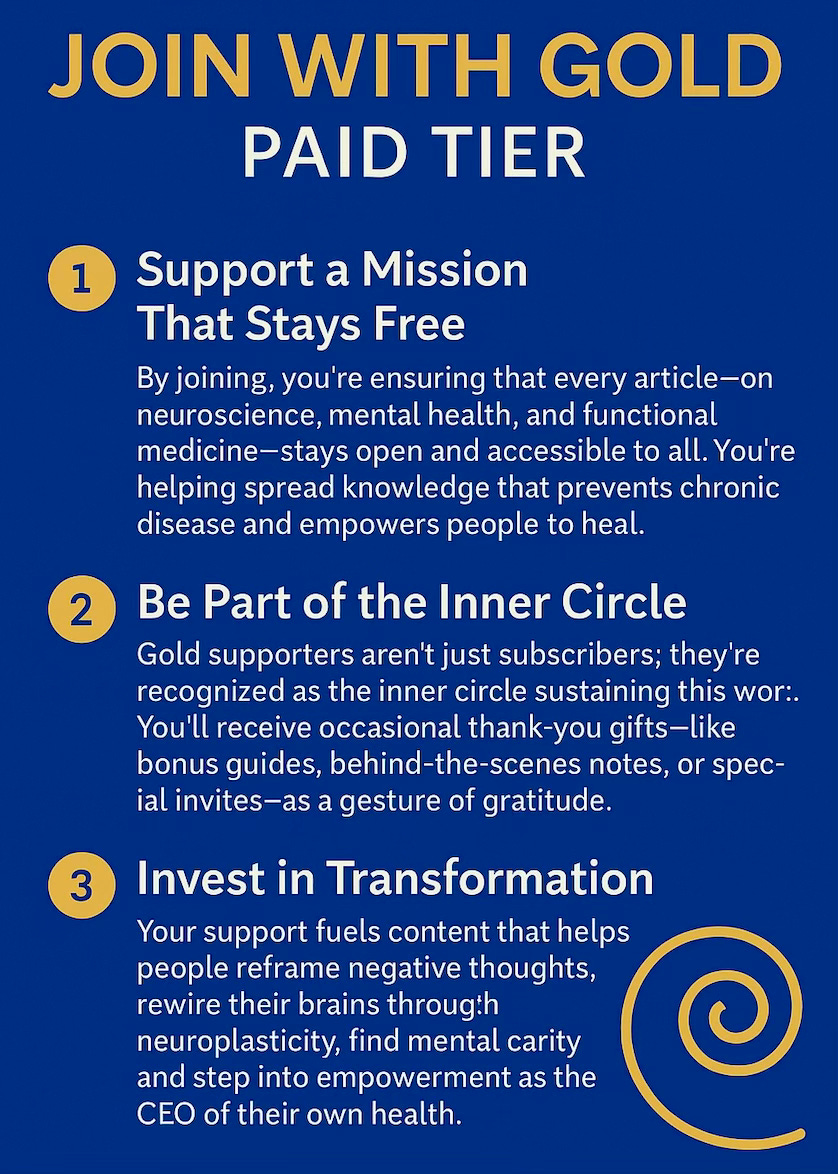
🌀NP Fellow will always be free—but if you’d like to support this mission, you can now Join with Gold!

I. When Someone Hands You A Diagnosis You Never Saw Coming
There are special moments that split your life into “before” and “after.”
A relationship fractures.
A sentence drops like an earthquake.
Your nervous system goes into freefall.
You say things you never thought you’d say.
You feel things that terrify you.
You lose your center in a way you can’t explain.
And then, during the aftermath of emotional collapse, a healthcare provider says something like:
“Possible Cluster B personality disorder.”
If you felt shock, shame, confusion, or fear, that reaction is human.
If your chest tightened reading this, that’s normal.
You’re not weak. You’re not broken. You’re not doomed.
A diagnosis made during crisis is a snapshot, not the story of who you are.
Before we go any further, take one deep breath. Breathe in for four and out for six. Your body needs gentleness right now.
This article is for you, the one reader moving through this moment with fear in one hand and uncertainty in the other.

II. What Cluster B Personality Disorders Actually Are (Without The Internet Stigma)
Cluster B includes four diagnoses:
Borderline Personality Disorder (BPD)
Histrionic Personality Disorder (HPD)
Narcissistic Personality Disorder (NPD)
Antisocial Personality Disorder (ASPD)
All four share patterns related to:
emotional intensity.
difficulty regulating emotions.
unstable or sensitive relationships.
fear of abandonment.
impulsive reactions during stress.
self-worth tied to connection or validation.
rapid shifts between closeness and distance.
identity confusion.
What most people never learn is this:
Cluster B has nothing to do with being “dramatic,” “manipulative,” or “toxic.”
These disorders are rooted in trauma, nervous system overload, attachment wounds, and coping patterns formed in childhood or early adulthood.
They’re not moral failings. They’re not character flaws and they’re absolutely treatable.
III. What Cluster B Is Not
Let’s clear the air.
Cluster B is NOT:
“acting crazy”
“attention-seeking”
“doing things on purpose to hurt people”
“manipulating”
“dangerous by default”
“your identity”
“a one-time crisis reaction”
“diagnosable from a single emotional episode”
Most importantly:
Cluster B cannot be accurately diagnosed during a breakdown, panic episode, breakup, or hospitalization.
Your nervous system under extreme distress ISN’T your baseline personality.

IV. Why Crisis Moments Create “False Positives” (And why this matters more than anyone tells you.)
When emotional shock hits—especially sudden rejection, loss, abandonment, or fear—your brain flips into survival mode.
Here’s what happens physiologically:
Amygdala Hijack
Your fear center takes over and scans for threat.
Prefrontal Cortex Shutdown
Your logical, rational thinking goes offline.
Cortisol Flood
Stress hormones surge through your bloodstream.
Attachment System Activation
Your brain interprets emotional loss as physical danger.
Dissociation or Collapse
You may feel numb, detached, hazy, or hopeless.
Suicidal ideation surfaces as a shutdown reflex
This is not a desire to die—it’s the nervous system trying to escape intolerable overwhelm.
These states can mimic Cluster B traits, especially Borderline Personality Disorder (BPD), but they’re directly driven by trauma and physiology, not personality structure.
You can act in ways that don’t match who you normally are.
You can feel emotions that scare you.
You can say things you don’t mean.
You can break down in ways you didn’t know you were capable of.
This is not proof of a personality disorder. This is proof you’re human and overwhelmed.
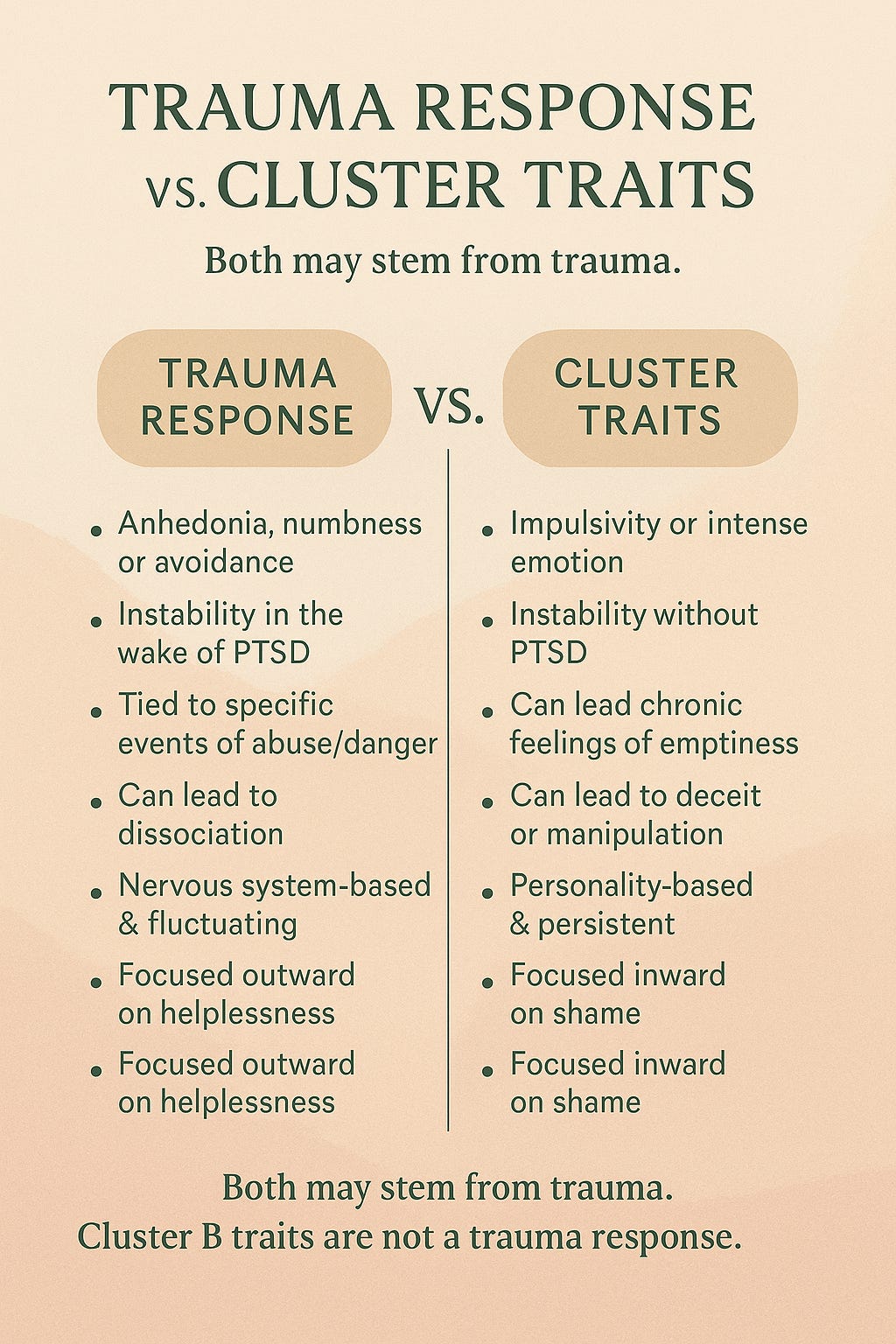
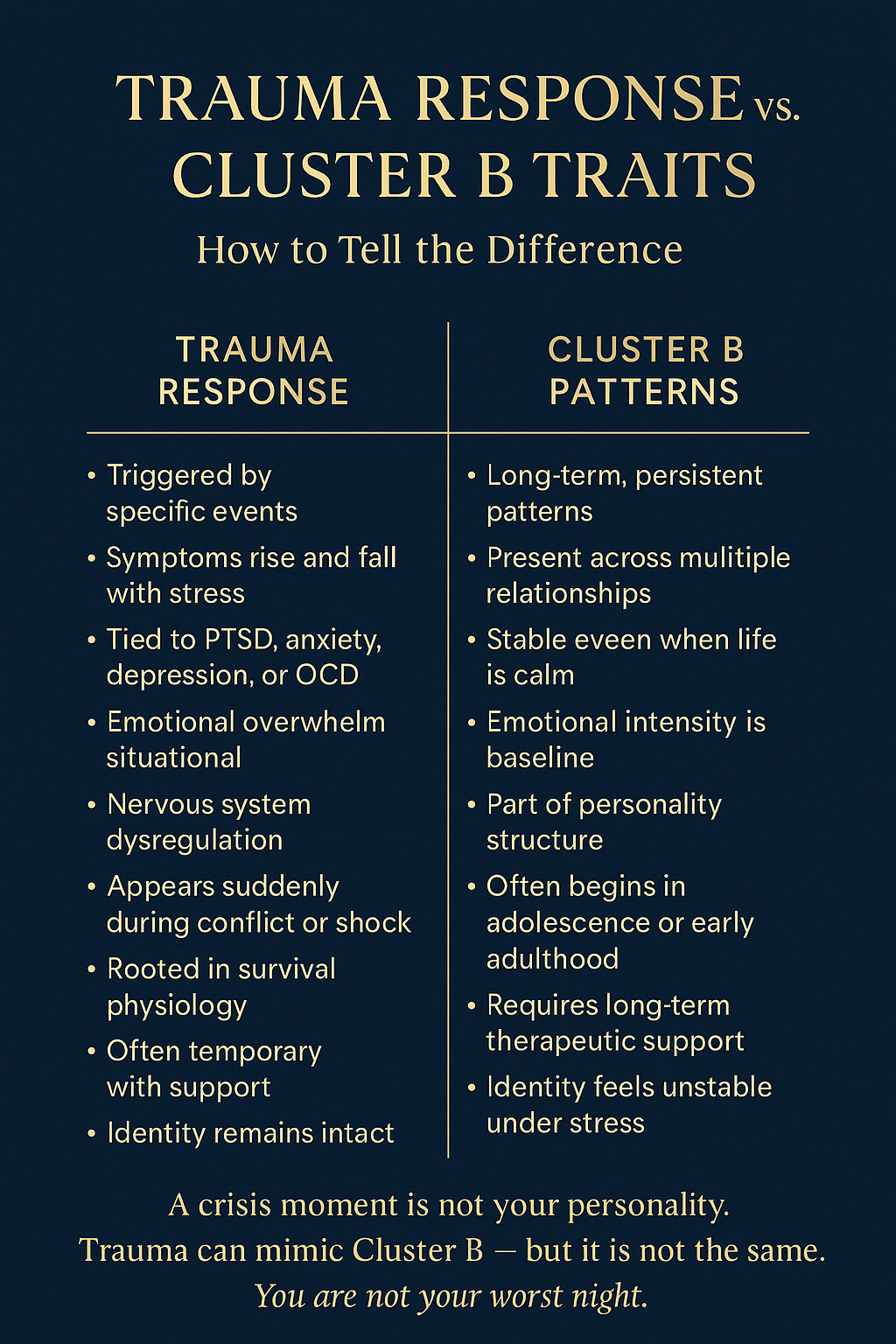
V. Trauma vs. Cluster B: How to Tell The Difference
Trauma Response
tied to specific triggers.
highly sensitive to relationship stress.
amplified by sleep loss, conflict, or fear.
improves when the stressor resolves.
rooted in PTSD, anxiety, OCD, or depression.
nervous system dysregulation.
emotions feel too big for the body to hold.
Cluster B Personality Patterns
long-term patterns across years.
appear in multiple relationships and environments.
not tied to a single crisis.
stable even when life is calm.
present since adolescence or early adulthood.
part of personality structure, not just stress.
If your emotional intensity came out suddenly, during a trauma, or during a massive life event, that’s trauma—not a personality disorder.

VI. What It Feels Like Inside The Body
(You need this section, because feeling understood is stabilizing.)
Cluster B traits, or trauma that looks like them, often feel like:
your body is too small for your emotions.
panic hitting without warning.
feeling over-attached or under-attached.
fearing abandonment like it’s physical danger.
going from calm to overwhelmed in seconds.
feeling misunderstood even when people try.
emotional pain that feels unbearable.
shame spirals that hit instantly.
not trusting your own reactions.
your identity dissolving under stress.
These experiences come from a dysregulated nervous system, not a broken personality.

VII. If You Think You Might Have Cluster B Traits: A Compassionate Roadmap
Before anything else, just pause.
Place a hand on your chest, notice your breath, and acknowledge you’re safe in this moment.
Let’s move forward gently.
A. Step 1: Stabilize Your Nervous System
No diagnosis can be trusted unless the body is calm.
Try:
slow, long exhales.
cold water on wrists.
stepping outside to feel sunlight.
grounding your feet into the floor.
30 minutes of movement.
simple meals.
sleep hygiene.
reducing emotional overwhelm for a few days.
Your brain needs regulation before evaluation.
B. Step 2: Get a Real Evaluation (Not a Crisis Label)
A proper assessment involves:
multiple sessions.
deep history-taking.
structured interviews.
evaluating childhood trauma.
assessing relationship patterns
ruling out PTSD, OCD, anxiety, and depression.
understanding attachment style.
A Baker Act diagnosis is temporary, provisional, and incomplete.
You deserve a specialist who sees the whole you.
C. Step 3: Learn the Skills That Heal Emotional Intensity—DBT
DBT (Dialectical Behavior Therapy) is the gold standard for Cluster B traits and emotional dysregulation.
It teaches four life-changing skills:
Emotion Regulation
How to calm your body, name your feelings, and stop emotional overwhelm.
Distress Tolerance
What to do when everything feels unbearable, without self-harm or impulsive reactions.
3. Interpersonal Effectiveness
How to communicate without fighting, withdrawing, or escalating.
4. Mindfulness
How to stay in the present moment instead of reacting from fear or old trauma.
DBT literally rewires the brain’s emotional pathways.
D. Step 4: If You Need More Support: DBT & IOP
A DBT Intensive Outpatient Program (IOP) includes:
3–5 days per week.
2–3 hours per day.
skills groups.
individual therapy.
crisis coaching.
medication support.
a full treatment team.
IOP is ideal for people who are:
overwhelmed.
newly diagnosed.
emotionally dysregulated.
suicidal, but safe to be home.
recovering from relational trauma.
needing fast stabilization.
Many people feel significant relief within 6–12 weeks.
E. Step 5: Build a Regulated Life
Cluster B traits soften dramatically in:
predictable environments.
calm relationships.
stable routines.
structured mornings.
low-conflict communication.
supportive social circles.
A regulated life creates a regulated brain.

VIII. If You Love or Live With Someone Who Has Cluster B Traits
Relationships can be healing, but only when both people have tools.
Let’s be honest:
Loving someone with Cluster B traits without skills can feel like walking through fire, but loving them with skills can feel like finally speaking the same language.
A. Start With Understanding
Their reactions come from:
fear.
shame.
trauma.
attachment wounds.
emotional overwhelm.
Not intention.
They aren’t trying to hurt you. They’re trying to survive their own internal storms.
B. What Helps Your Loved One Feel Safe
Use:
a calm voice.
simple, direct communication.
boundaries expressed clearly.
reassurance without over-rescuing.
pausing conversations when emotions escalate.
validation.
staying grounded.
“Your feelings matter. Let’s slow down” is one of the most regulating sentences in the world for someone with emotional intensity.
C. What Helps YOU Stay Safe
You can’t:
be their therapist.
prevent their triggers.
regulate their emotions.
sacrifice yourself to keep them calm.
You must:
set clear boundaries.
avoid walking on eggshells.
identify your limits.
stay connected to your own support system.
practice emotional detachment with love.
Love isn’t self-elimination or self-cancellation.
D. When Love Works & When It Doesn’t
Love can thrive when:
the person is in DBT.
both people take responsibility.
boundaries are respected.
communication is consistent.
emotional intensity is managed.
Love stops working when:
there is chronic emotional harm.
boundaries are ignored.
instability repeats.
there’s refusal to seek treatment.
one partner disappears inside the other’s pain.
Attachment can heal. Attachment can also break. Both truths can coexist without villainizing either person.

IX. If You’re in The Immediate Aftermath of a Diagnosis
(A 6-Step Stabilization Plan)
Drink a full glass of water.
Step outside and feel the air on your skin.
Call or text one safe person.
Eat something grounding like protein, fruit, or warm food.
Get horizontal for 20 minutes to reset your nervous system.
Remind yourself:
“This isn’t my permanent state. This isn’t my identity.”
You are in recovery from shock, not character collapse.
X. Final Thoughts: Healing Forward
You’re not your worst 72 hours.
You may feel scared, ashamed, and you may be questioning who you are or what this means for your future.
But here’s the truth:
Your diagnosis isn’t your destiny.
Your nervous system isn’t your identity.
Your breakdown isn’t your biography.
Your past patterns aren’t your final form.
Your life isn’t over, your story definitely isn’t over, and your capacity to heal is enormous.
Cluster B is treatable, trauma is treatable, and attachment wounds are repairable.
Emotional intensity can become emotional depth.
You aren’t beyond help, you aren’t alone, and you certainly aren’t defined by a clinician’s clipboard, a moment of crisis, or the worst night of your life.
You’re human, you’re healing, and you’re already on your way.
Thank you for reading this article.
Until next Sunday,
—Jessica
Your 2am friend who actually gets it
“Emotional maturity isn’t about being above your emotions. It’s about being able to sit
with the rawness of every feeling without letting it take over your mind and actions. It’s about facing storms without getting blown away.” —Yung Pueblo
🪩 If this article resonated with you, consider Joining The Paid Gold Tier of the NP Fellow Community.
It’s where we go beyond inspiration and into integration—with practical tools, evidence-based insights, the complete NP Fellow healing library, exclusive digital products, deeper conversations, and private reflections shared with the Join with Gold community to support you while you take extreme ownership, keep you grounded in your personal development and devoted to disciplined self-mastery, growth, and healing.
Because healing isn’t just about what happened—It’s about what happens next.
If you’re ready to go deeper into who you’re becoming, upgrade to the paid subscription here.
Your future self will thank you.
🚨My new podcast NP Fellow Collective is now live on Spotify!
Fresh Playlists Created by Yours Truly on Spotify🔊
My new annual “end of the year” vibes playlist, don’t sleep!!🧙♀️
That UK Jungle fire sound, IYKYK!!🔥
Techno snobs ONLY, watch how you speak to us!!💅
Recent Articles👩⚕️✍️
When Someone You Love Isn’t In Love With You Anymore

“Heal yourself, not just so you can thrive, but to ensure that people who cross your path in the future are safer from harm.”
Your Identity Is Running Your Life—Here’s How to Rewrite It

“Two of the great lessons humanity will learn in the 21st century will be: to harm another is to harm oneself. And when heal yourself, you heal the world.”
Breaking Free From Depression & PTSD: How Psilocybin Rewires The Brain

“True power is living the realization that you are your own healer, hero, and leader.”
Looking for Quick, Mindful Workouts to Elevate Your Fitness Routine? 👇⏰💪
Check out my ebook, A Pocket Book of Express Mindful Workouts, designed to help you seamlessly integrate daily movement into your modern life.
This ebook features 20 express, mindful workouts, each just 17 minutes long, making it easy to stay active wherever you are—whether at home, in a hotel, or even outdoors.
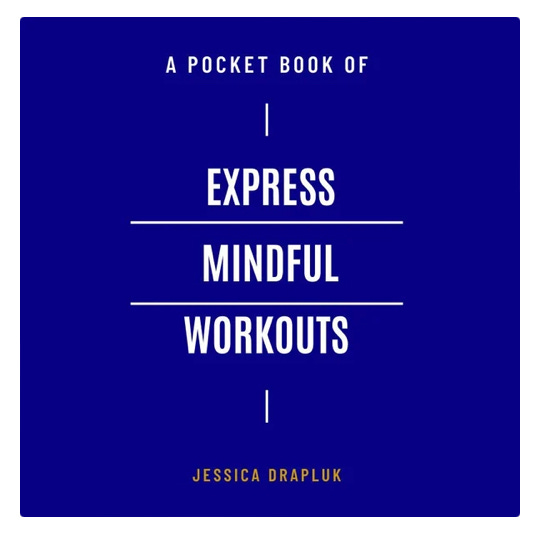
An Express Mindful Workout combines physical movement with mindfulness, focusing on maintaining proper form and controlled breathing.
These quick routines will test your mental toughness, improve cardiovascularfitness, and build muscle strength, all while helping you develop a consistent daily workout practice.
Best of all, you can download the ebook instantly and carry it with you wherever you go.
So, no matter how busy your schedule, you’ll always have time to get moving!!
Manifest Your Mornings with The Perfect Sunrise 🌅✨

Every new day holds the energy of fresh beginnings.🌅🌆
My exclusive collection of sunrise photos captures the tranquil magic of the morning sun and tropical shores at dawn—ideal for screen savers, digital vision boards, social media posts, and more.🏝️🌊
Elevate Your Environment & Attract Positivity with Every Sunrise.📲🌅
A pack of 10 high-resolution digital photo downloads.
Stunning, beautiful screen savers & wallpapers.
Perfect for Law of Attraction & manifestation rituals.
Instant access for social media & creative, digital projects.
Instant download, endless inspiration—immerse yourself in the warmth of paradise today!!🌅🏝️
Click here to gain access to my incredible sunrise photos packs.👈
MEDICAL DISCLAIMER
This content is for informational and educational purposes only. It is not intended to provide medical advice or to take the place of such advice or treatment from a personal physician. All readers/viewers of this content are advised to consult their doctors or qualified health professionals regarding specific health questions. All viewers of this content, especially those taking prescription or over-the-counter medications, should consult their physicians before beginning any nutrition, supplement or lifestyle program.
What a great write up! I'm always awed by how well you write and summarize complicated and nuanced subjects. Wishing you a Happy Thanksgiving!!
I didn’t even know what this is but thanks for including all your support. Just being aware helps all of us find a way to help out.