

“Curiosity acts as a powerful tool for emotional regulation and self-awareness, allowing individuals to process intense feelings like sadness, anger, or fear by investigating their roots rather than reacting automatically.”

🩵A Note from Me
Hi, I’m Jessica.
I write NP Fellow, a weekly mental health and functional medicine newsletter, to help readers build emotional regulation skills, gain mental clarity, prevent burnout, and become the C.E.O. of their own health.
At the center of all of this work is learning, not as optimization or self-improvement, but as a way of staying open, flexible, and dynamic to life as it changes.
Curiosity plays a critical role in that process. It keeps the nervous system adaptable, the mind receptive, and our sense of aliveness intact—especially during periods of uncertainty, leadership, or transition.
This article builds on my earlier work on curiosity and expands it beyond brain health into meaning, leadership, and lifelong growth.
My hope is that it reminds you that mental clarity doesn’t come from having everything figured out, but from staying curious enough to keep learning.
Thank you for being here and for choosing to remain a student of life.
My annual winter vibes playlist for 2026 is now out Spotify!!
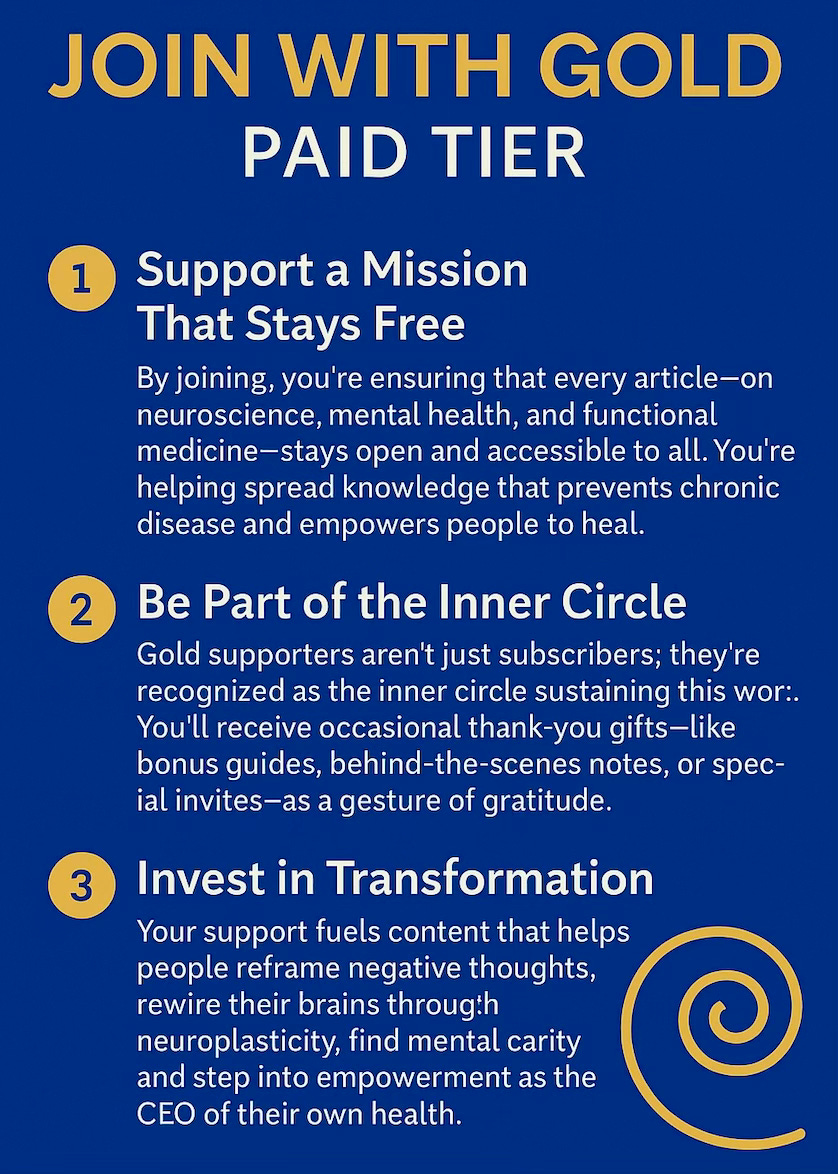
🌀 The NP Fellow Sunday articles will always be free and remain open and accessible to everyone.
For readers who want a deeper, more practical layer, I’ve created Weekly Skills—short, grounded practices designed to help you build self-trust, emotional steadiness, and nervous-system resilience week by week.
If you’d like to support the work and access the Weekly Skills, you can Join with Gold below!

Curiosity Is What Keeps Us Learning and Growing
There’s a quiet moment most people don’t notice when it happens.
It’s the moment curiosity softens, not dramatically or all at once.
Just a subtle shift from:
Asking questions to repeating answers.
Wondering to knowing.
Learning to defending.
And when that happens, life doesn’t fall apart; it narrows.
We still function. We still succeed. We still move forward, but something essential goes offline—the spark and the flexibility.
The sense of aliveness that comes from being in conversation with the world instead of standing apart from it.
This is why curiosity matters so deeply—not just for the brain, but for the kind of life we live.
And it’s why the greatest leaders I’ve ever observed—clinicians, teachers, parents, creators, and thinkers—share one defining trait: they remain students.
Leadership Isn’t Certainty; It’s Sustained Curiosity
Leaders are able to make decisions with or without having the right answer
However, real leadership doesn’t come from certainty. It comes from the capacity to stay open longer than others do.
The people who shape culture, heal systems, and influence lives don’t lead because they know more.
They lead because they keep learning.
They ask better questions.
They listen without rushing to resolve.
They remain interested even when it would be easier to be right.
Curiosity is what allows leadership to stay human.
Without it, authority becomes rigid expertise becomes brittle, and growth quietly stalls.

Curiosity Keeps Us Alive
Curiosity isn’t a personality trait; it’s a nervous-system state.
When curiosity is present, the brain becomes flexible instead of defensive.
The body feels safe enough to explore rather than protect.
The heart stays open instead of closing around certainty.
This is why curiosity keeps the brain young and the spirit vibrant.
It activates learning without threat.
It invites novelty without overwhelm.
It keeps us in relationship with life instead of retreating into conclusions.
The opposite of curiosity isn’t ignorance; it’s rigidity.
And rigidity is exhausting.
Why We Stop Being Curious
Most adults don’t stop being curious because they lose interest.
They stop because curiosity starts to feel risky.
Risky to identity.
Risky to status.
Risky to the version of ourselves we’ve already built.
Curiosity requires humility and humility requires safety.
It asks us to admit:
I might not know.
I might need to revise.
I might be wrong.
So instead, a lot of us armor up with certainty.
We repeat what we’ve already learned and we stay inside familiar ideas and familiar stories.
And slowly, the world becomes smaller.

The Curious Life Isn’t Optimized; It’s Lived
Curiosity doesn’t show up as a productivity hack; it shows up as a way of being.
The curious life looks like:
reading widely, not just efficiently.
keeping notebooks for questions, not conclusions.
traveling not to escape, but to notice.
challenging inherited beliefs with gentleness and courage.
allowing yourself to feel childlike wonder again—without embarrassment.
Children don’t ask questions to win. They ask because they’re alive.
Curiosity is how we return to that state—not by becoming naïve, but by becoming present.
Curiosity as A Leadership Practice
The leaders who endure don’t rush to answers. They stay longer in inquiry.
Curious leaders understand that:
questions create movement.
certainty creates stagnation.
curiosity keeps systems adaptable.
In a world moving faster every day, curiosity is not a luxury. It’s a stabilizing force.
Curiosity keeps us learning instead of hardening, engaged instead of cynical, and alive instead of merely functional.

Final Thoughts: A Return to Aliveness
You don’t lose your edge by staying curious; you lose it the moment you stop.
The moment we stop learning, we don’t just stop growing—we start fading.
Curiosity is the posture that keeps a life alive. It keeps the brain flexible, the heart open, and the spirit in motion.
And the most powerful thing about it? You can choose it again at any moment.
✍️A Quick Journaling Reflection Prompt: Where in your life have you stopped asking questions—and what might come back online if you started again?
Thank you for reading this article.
Until next Sunday,
—Jessica
Your 2am friend who actually gets it
“Curiosity is especially useful when intense emotions arise. When we encounter sadness, for instance, we can ask ourselves where it is coming from. When we find a hardened pattern, we can ask ourselves how it came to be. Was it a tactic of survival? Did it emerge from fear? Where is this sadness coming from? When did this pattern start forming? What triggers this pattern and how is this behavior affecting my life?” —Yung Pueblo

🪩 A Gentle Invitation
If this article resonated with you, you may appreciate my new product called Weekly Skill, a paid NP Fellow series focused on one real, grounded internal skill each week regarding attention, distress tolerance, emotional regulation, presence, and learning how to work with your nervous system instead of against it.
No pressure. Just an invitation.🤝
🚨My new podcast NP Fellow Collective is now live on Spotify!
Recent Articles👩⚕️✍️

ADHD: Understanding The Brain That Won’t Sit Still

“One of the most heroic things anyone can do is break the line of hurt. When people heal themselves, they stop the hurt from multiplying and their relationships become healthier. When people heal themselves, they also heal the future.”
We Struggle and Succeed Together

“Real maturity is observing your own inner turbulence and pausing before you project how you feel onto what is happening around you.”
Looking for Quick, Mindful Workouts to Elevate Your Fitness Routine? 👇⏰💪
Check out my ebook, A Pocket Book of Express Mindful Workouts, designed to help you seamlessly integrate daily movement into your modern life.
This ebook features 20 express, mindful workouts, each just 17 minutes long, making it easy to stay active wherever you are—whether at home, in a hotel, or even outdoors.
An Express Mindful Workout combines physical movement with mindfulness, focusing on maintaining proper form and controlled breathing.
These quick routines will test your mental toughness, improve cardiovascularfitness, and build muscle strength, all while helping you develop a consistent daily workout practice.
Best of all, you can download the ebook instantly and carry it with you wherever you go.
So, no matter how busy your schedule, you’ll always have time to get moving!!
MEDICAL DISCLAIMER
This content is for informational and educational purposes only. It is not intended to provide medical advice or to take the place of such advice or treatment from a personal physician. All readers/viewers of this content are advised to consult their doctors or qualified health professionals regarding specific health questions. All viewers of this content, especially those taking prescription or over-the-counter medications, should consult their physicians before beginning any nutrition, supplement or lifestyle program.
Curiosity is important in every phase of life; without this life gets boring
Such a great post, Jessica. In martial arts it is called the beginner mindset set. Keeping our minds open to learning new things is paramount for the human experience. Without curiosity, we risk stagnation in our development.