

“Be kind, help others, and don’t forget to live for yourself.”
🩶 A Note from Me
Hi, I’m Jessica.
I write NP Fellow Become the CEO Your Health, a weekly mental health and functional medicine newsletter, to help readers build emotional regulation skills, gain mental clarity, prevent burnout, and become the C.E.O. of their own health.
Someone tells you that you did a great job.
Maybe you received a promotion.
Finished something difficult.
Got accepted into a program you worked hard to get into.
Or someone simply noticed how well you handled something.
For a moment, you feel proud.
Then your mind gets involved.
They don’t know how much help I had.
I probably just got lucky.
Other people could have done that.
What if they expect me to do it again?
Something you worked hard for has finally happened, and instead of letting yourself recognize it, you’re already explaining why it doesn’t count.
The strange part?
If someone you cared about accomplished the same thing, you’d probably be the first to tell them they deserved it.
→ However, when it’s you, there’s always another qualification.
It’s as though the standard for being good enough keeps moving every time you get close to meeting it.
🚨🔊My New Annual Halloween Vibes playlist - 2026 edit is now out on Spotify along with my podcast called NP Fellow Collective!
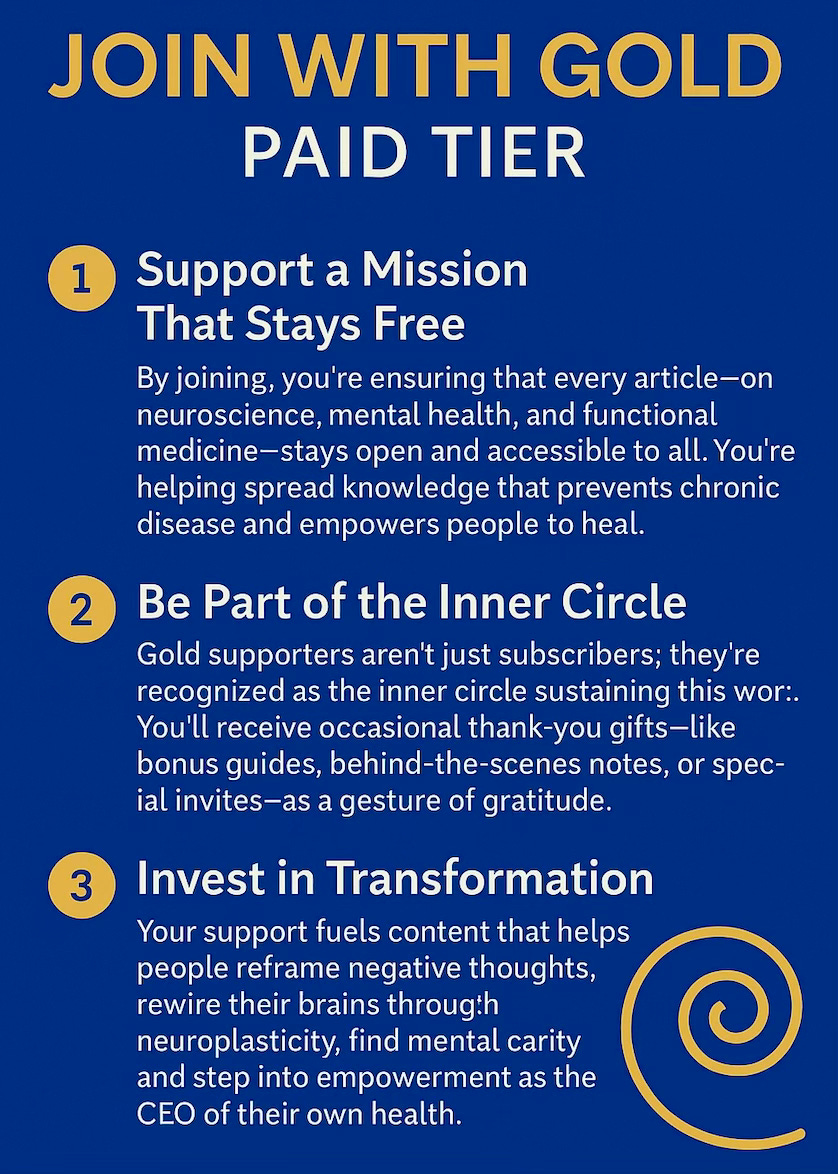
🌀 NP Fellow Sunday articles will always be free.
For readers who want practical tools to build emotional regulation skills week by week, I’ve created The Weekly Skill—a structured training system for developing self-trust, nervous system stability, and psychological flexibility.
If you’d like to support this work and access The Weekly Skills every Wednesday, upgrade here.

The Accomplishments You Keep Explaining Away
You’d think achieving something would make you feel more confident.
Sometimes it does, but sometimes, the moment you reach a goal, you find a way to make it smaller.
You got the job because the competition wasn’t that strong.
You passed the exam because you studied the right material.
You handled a difficult situation because someone helped you.
You received praise because the person was being nice.
Of course circumstances matter. Luck exists. Other people contribute to our success. Nobody accomplishes everything alone.
But why does acknowledging those things have to mean dismissing your own contribution?
Getting help doesn’t erase what you did.
Having an opportunity doesn’t mean you didn’t earn it.
And something being easier than you expected doesn’t mean it wasn’t worth doing.
Here’s a question worth considering: What would actually convince you that you’re capable?
A promotion?
More experience?
A certain achievement?
What happens when you reach that milestone and still don’t believe it?
If every accomplishment comes with a reason it doesn’t count, the problem may not be a lack of evidence.
It may be the standard you’re using to evaluate yourself.
When Success Makes You Feel More Exposed
We often imagine success will make us feel more secure, but sometimes, it does the opposite.
You get promoted, and now you’re worried people will discover you’re not ready.
You receive recognition, and suddenly you feel pressure to perform at that level again.
Someone asks you to lead a project, and instead of feeling trusted, you wonder whether they’ve overestimated your abilities.
The opportunity you wanted has arrived. Now you’re afraid you won’t live up to it.
This experience is often called imposter syndrome, or more accurately, the impostor phenomenon.
It’s the persistent feeling that your accomplishments don’t reflect your actual abilities, often accompanied by the fear that other people will eventually discover you’re less capable than they think.
And it can create an exhausting relationship with achievement.
Before you succeed, you’re trying to prove you belong.
After you succeed, you’re trying to make sure nobody discovers you don’t.
Success stops feeling like something you earned and starts feeling like something you have to defend.
So you prepare more, work harder, and double-check everything.
Not necessarily because the work requires it, but because making a mistake feels like it could confirm your worst suspicion about yourself.
And when you do succeed again?
You may feel relieved, but relief isn’t the same as believing you’re capable.

Why Your Mistakes Count More Than Your Successes
Imagine you give a presentation.
You prepared carefully, people were engaged, and several colleagues tell you it went well, but halfway through, you stumbled over a sentence.
Guess which part you’re thinking about on the drive home?
Not the preparation, not the questions you answered well, and not the positive feedback.
The sentence.
See? I’m not as good at this as people think.
Now imagine a colleague told you the same story.
Would you decide they weren’t qualified because they stumbled over a few words?
Probably not.
You’d consider the entire presentation, but when evaluating yourself, you may use a very different standard.
A successful presentation doesn’t prove you’re capable because you were well prepared.
A mistake, however small, feels like evidence that you’re not.
And that’s a difficult standard to live under.
A mistake becomes proof of who you are. An accomplishment becomes something you have to explain away.
Being Inexperienced Isn’t Being An Imposter
Sometimes you feel uncertain because you’re doing something you haven’t done before.
You’re learning a new role.
Taking on more responsibility.
Working with people who have more experience.
Entering a room where you don’t know the expectations yet.
You might genuinely have things to learn, you might make mistakes, and you might need guidance.
None of that automatically means you shouldn’t be there.
There’s also an important difference between doubting yourself and being in an environment that repeatedly gives you reasons to question whether you’re accepted or valued.
If you’re regularly dismissed, held to inconsistent standards, or expected to prove yourself more than others, your uncertainty may be responding to something real.
Not every feeling of inadequacy comes from the way you think about yourself.
However, whether the uncertainty comes from within or from your circumstances, it helps to distinguish two very different conclusions:
I have something to learn.
And:
I don’t deserve to be here.
One identifies an area for growth.
The other turns that area into a judgment about your entire capability.
→ You can be qualified for an opportunity and still have room to grow into it.
You don’t have to know everything before you belong.
You Don’t Have To Feel Confident To Be Capable
Here’s something we don’t always recognize.
→ Feeling confident and being capable are two different things.
You can feel uncertain and still know what you’re doing.
You can feel confident and still be mistaken.
Your emotional state doesn’t always give you an accurate picture of your abilities.
Think about the last time you did something difficult while feeling nervous.
Maybe you spoke up in a meeting.
Handled an unfamiliar responsibility.
Had a conversation you’d been avoiding.
Or figured something out as you went.
You may not have felt confident at all, but you still did it.
→ The fact that you felt uncertain doesn’t erase what you knew, the decisions you made, or the skills you used and this is where constantly moving the goalposts becomes a problem.
You tell yourself you’ll feel capable when you have more experience.
Then you get more experience. Now you need better results.
You get better results. Now you need to make fewer mistakes.
At some point, it’s worth asking whether you’re waiting for confidence or demanding a kind of certainty that nobody can reasonably achieve.
→ Confidence doesn’t require you to ignore your limitations, but it does require you to stop ignoring your strengths.
You can recognize what you’re good at without pretending you have nothing left to learn.
You can acknowledge an accomplishment without claiming you did it alone.
You can be proud of your progress while still wanting to improve.
You don’t have to exaggerate your accomplishments to stop minimizing them.

Final Thoughts
Maybe the problem isn’t that you haven’t done enough to feel capable.
Maybe you’ve gotten so used to questioning yourself that every accomplishment comes with a new condition.
More experience, better results, and fewer mistakes.
But before you raise the standard again, ask yourself something:
If someone else had done what you’ve done, would you still be telling them it wasn’t enough?
Thank you for reading this article.
Until next Sunday,
—Jessica
Your 2am friend who actually gets it
“As the wisdom within your matures, it becomes easier to let go, to stop fighting yourself, and to move with nature instead of against it.” —Yung Pueblo

🪩 A Gentle Invitation
If this article resonated with you, you may appreciate my new product called Weekly Skill, a paid NP Fellow series focused on one real, grounded internal skill each week regarding attention, impulse control, emotional regulation, presence, and learning how to work with your nervous system instead of against it.
No pressure. Just an invitation.🤝
Recent Articles👩⚕️✍️


NP Fellow Collective Podcast & Playlists on Spotify
MEDICAL DISCLAIMER
This content is for informational and educational purposes only. It is not intended to provide medical advice or to take the place of such advice or treatment from a personal physician. All readers/viewers of this content are advised to consult their doctors or qualified health professionals regarding specific health questions. All viewers of this content, especially those taking prescription or over-the-counter medications, should consult their physicians before beginning any nutrition, supplement or lifestyle program.