


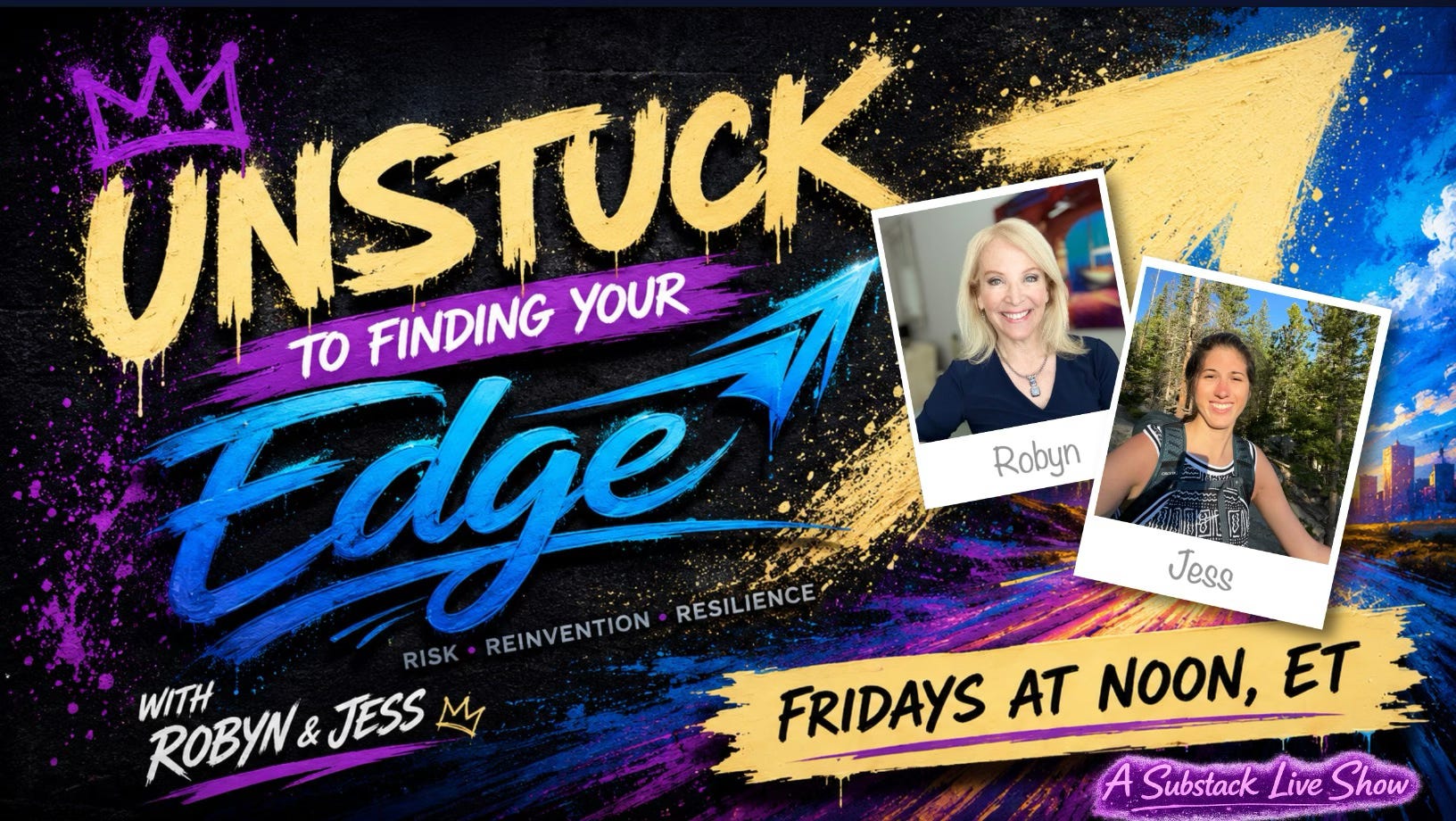
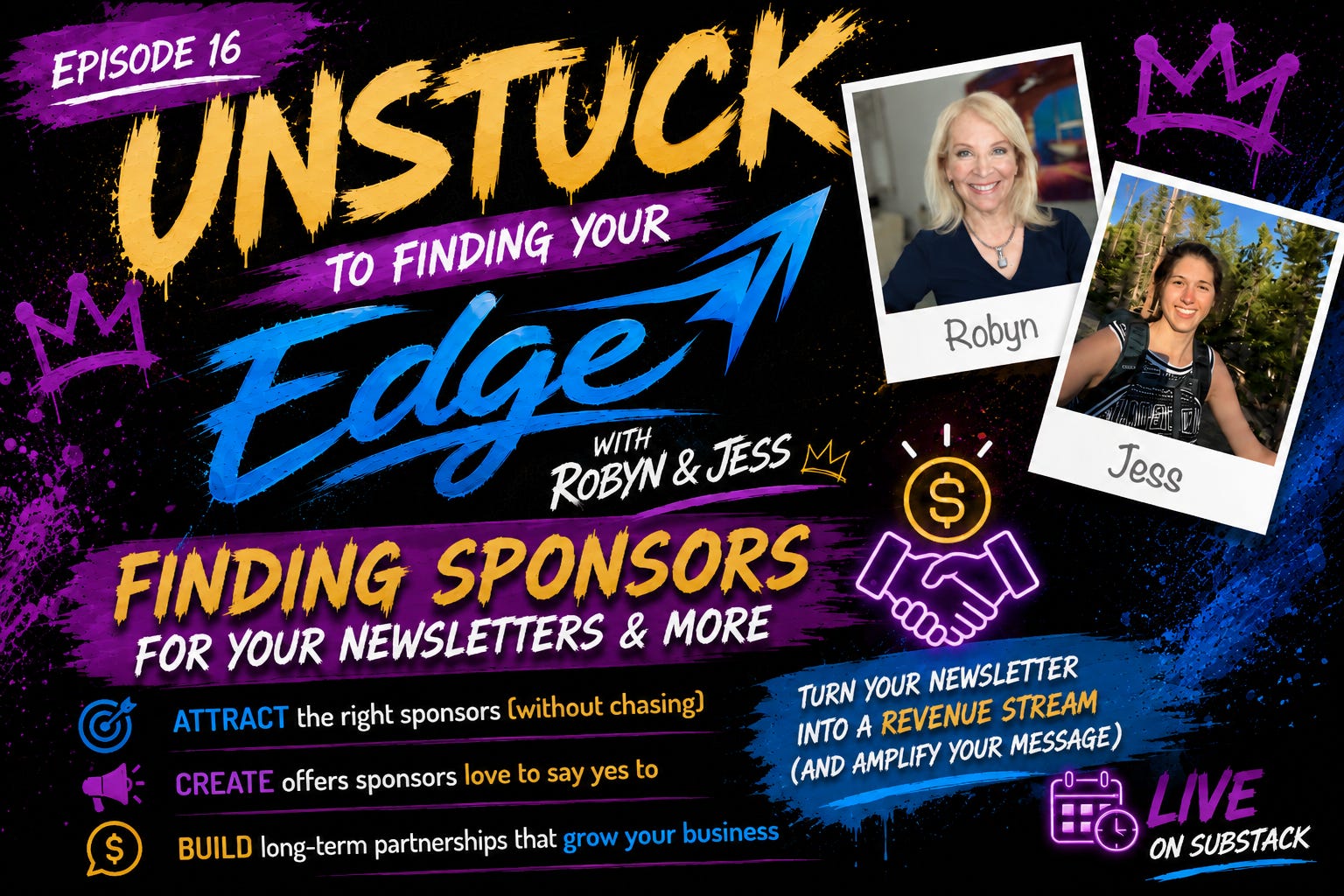
Editor’s Note: This article is based on Episode 016 of Unstuck to Finding Your Edge, my weekly Substack Live series with Robyn Levin of Finding Your Edge. This week, we did something different: Robyn turned the Live into a real-time strategy session to figure out how I could start attracting sponsors for my health publication, NP Fellow: Become the CEO of Your Health.
I hadn’t really thought about sponsors.
Subscribers? Yes.
Paid subscriptions? Yes.
Growing NP Fellow, writing better articles, building offers, getting the work in front of more people? Obviously.
But companies paying to sponsor the publication? Not really.
When Robyn and I first talked about doing a live sponsorship strategy session, my reaction was basically:
Sponsors?
Because in my head, sponsorship belonged somewhere further down the road.
Get bigger first.
Then maybe think about sponsors.
Except Robyn looked at NP Fellow and saw something I wasn’t looking at.
I already had an established publication, I already had readers, and those readers were interested in a pretty specific group of things.
So she started asking me questions.
Who Actually Reads NP Fellow?
Before we talked about companies, pricing, media kits, pitches, or anything else, Robyn asked me to describe my readers.
→ NP Fellow covers mental health, functional medicine, emotional regulation, physical health, and what I call becoming the CEO of your health: paying attention, advocating for yourself, and taking a more active role in the decisions that affect you.
My readers tend to be adults interested in their health who want to understand themselves better and make better decisions about how they live.
Some are interested in mental health.
Some have experienced trauma.
Some come for the physical-health side.
Some are working on emotional regulation.
And somewhere in that conversation, the sponsorship thing finally clicked for me.
I said:
→ “You’re looking for the same audience or, like, audience overlap.”
Exactly.
That changed the question.
Instead of sitting there trying to think of companies that sponsor newsletters, I could look at my readers and ask:
→ Which companies are already trying to reach these people?
Robyn had done exactly that years ago when she owned an ice-skating arena.
She had skaters coming through the doors, so she looked at the businesses that wanted those customers.
Subway.
Coca-Cola.
Skating-equipment companies like Bauer and CCM.
She was already buying from some of those companies and now she had an audience full of their customers.
That was the opportunity. Different business. Same logic.
Your Subscriber Count Isn’t The Only Number That Matters
This was another assumption I had.
Surely you need a massive newsletter before a company is going to care.
Robyn disagreed.
She brought up newsletters with 500 or 1,000 subscribers and made the point that the relationship with those readers matters too.
Think about what happens when someone subscribes to a publication and keeps coming back.
They open your emails.
They read.
They reply.
They comment.
They listen to your podcast.
They show up for your Lives.
They know who you are before a sponsor ever enters the picture.
A company trying to reach that same person is starting much further away.
So yes, a sponsor is going to want to know your audience size.
However, subscriber count doesn’t tell them everything about what they’re buying.
That made me look at NP Fellow differently.
Maybe I didn’t need to hit some imaginary number before sponsorship became worth exploring.
Maybe I needed to understand the audience I already had.
Then We Started Naming Companies
Once I understood the audience-overlap idea, this got MUCH easier.
Robyn started throwing out possibilities.
Health and wellness companies.
Medical organizations.
Fitness companies.
Yoga brands.
Health apps.
Wearable technology.
Then she asked me what I actually use and I immediately thought of Thorne.
I’ve taken their supplements and I know the products.
And I told Robyn something that matters to me if I ever do this:
I would never want to recommend something I hadn’t actually tried myself.
That’s a hard line.
If a company appears in NP Fellow with my recommendation attached to it, I need to be able to stand behind what I’m saying.
I’m not interested in turning the publication into a rented billboard.
Then we thought of Oura.
That one was almost embarrassingly obvious.
I literally own an Oura Ring.
My current one is gold and it’s my second one.
Why hadn’t I thought about them?
And then came Nike.
Of course.
I wear Nike workout clothes and I’ve worn their shoes.
When I played hockey, I wore Bauer skates back when Nike owned Bauer. I even had Nike skates at one point.
Apparently Nike has been following me around for half my life and nobody thought to send the sponsorship contract.
Robyn decided we should collectively visualize the Nike sponsorship.
So that’s happening now.
#JessForNike.
But underneath the joke was something useful.
Within one conversation, I went from:
I don’t really know what companies I’d approach.
To:
→ Thorne. Oura. Nike.
Three potential sponsors and we hadn’t even made the list yet!
The Homework: Find Ten
Robyn originally told me to make a dream list of 20 companies.
Then she changed her mind to ten
Much less likely to make me open a spreadsheet, stare at it for 45 minutes, and decide I suddenly need to reorganize my kitchen.
So that’s my homework.
Ten companies whose customers overlap with NP Fellow readers.
Not ten random companies with large marketing budgets.
Ten where I can explain the fit.
Who do they serve?
What do they sell?
Do I already use the product?
Have they sponsored newsletters, podcasts, creators, or publications before?
Who handles those partnerships?
Why would NP Fellow’s audience matter to them?
We did the same exercise with podcasts I could potentially appear on.
The goal isn’t to contact everybody with a marketing department.
It’s to find the companies where I can make a legitimate case for why we should be talking.
Then Robyn Started Talking About Money
This is where the strategy session got interesting.
→ Robyn told me about sponsorship opportunities she’d seen where a company might pay around $2,500 for a single article or feature.
My reaction?
“$2,500 an article?”
Yeah.
Four digits for one article got my attention.
Then we started talking about what a pitch to a company like Thorne could actually look like.
→ Maybe they sponsor my Weekly Skill.
→ Maybe I write a standalone article about supplements I genuinely use and why.
Robyn floated $5,000 as a possible starting ask for that kind of sponsored feature.
If the company negotiates it down?
Fine.
You can come down from $5,000.
It’s considerably harder to casually announce halfway through negotiations that you’ve decided you’d actually like them to double the check.
And Robyn made another point I needed to hear:
→ Don’t base a company’s budget on your own wallet.
What feels like a huge amount of money to an individual may sit comfortably inside a company’s marketing budget.
That doesn’t mean pulling numbers out of thin air and hoping somebody wires you $50,000 before lunch.
→ You still need to know what you’re selling.
However, I shouldn’t automatically make the number smaller because asking for it makes me uncomfortable.
Then I Realized I Had Another Problem
The money sounded good.
Obviously, but when we started talking about longer sponsorships, my brain immediately went somewhere else.
What happens if someone sponsors Weekly Skill for a year...…and six months from now I don’t want to write Weekly Skill anymore?
Am I stuck?
Do I have to keep producing a series because somebody paid to have their name attached to it?
That bothered me.
Robyn explained that sponsorships don’t have to work that way.
They could be monthly, quarterly, annual, or one-time.
And THAT’S when I knew which option appealed to me most.
→ One sponsored article.
I write something I would genuinely stand behind.
The company sponsors that piece.
There’s a beginning and there’s an end.
Nobody owns my editorial calendar for the next 12 months.
Could that change eventually?
Sure, but right now, I like being able to do one partnership, see how it feels, see how readers respond, and decide whether I want to do another because making money from NP Fellow would be incredible.
Making money from NP Fellow and then feeling trapped inside the thing I built? Hard pass.
Then The Numbers Got Bigger
At one point, we started talking about annual sponsorships.
Monthly payments.
Upfront payments.
Discounting an annual agreement if a company pays the whole thing at once.
And I started doing the math.
If you had multiple publications and sponsors paying a few thousand dollars a month, suddenly we weren’t talking about a cute little side payment anymore.
I said:
“That would be, like, life-changing money.”
Because it would and that’s probably the moment when this stopped feeling theoretical to me.
I came into the conversation barely thinking about sponsors.
Now I was sitting there realizing an audience I’d already spent years building could potentially become another serious revenue stream.
Nothing about NP Fellow had changed during the conversation.
Same publication, same articles, and same readers.
I was finally looking at it differently.
Of Course, Eventually I Have To Ask
Near the end of the Live, Robyn brought up something we’d talked about the week before.
→ How I got my first nursing job.
It was almost ten years ago.
I’d gotten my nursing license and started applying online.
And nursing job listings had this ridiculous problem: I’d just graduated, but so many positions wanted two years of experience.
Cool.
Where exactly is the new graduate supposed to acquire those two years? The nursing-experience fairy?
After about three months, I got tired of sending applications into the void.
So I started physically showing up at hospitals.
One day, I heard a pediatric oncology floor was hiring.
I applied online that night.
The next day, I went to the hospital.
I walked into HR and I told them I’d applied online and I was highly interested in working there.
That eventually got me in front of the nurse manager and I got the job.
Robyn called that bold and I had to correct the record.
I was nauseous, like genuinely nauseous while I was doing this.
I wasn’t strolling into hospitals overflowing with confidence.
I was scared and I went anyway.
Which is annoyingly relevant to this sponsorship thing because I can make my list, research every company, figure out pricing, build a media kit, write seventeen versions of a pitch email, and move commas around until I’ve convinced myself this counts as productive work.
Eventually, I still have to send the damn thing.
Nike can say no, Thorne can ignore me, and Oura can decide NP Fellow isn’t the right fit.
Fine, but none of them can say yes to an email I never send.
So That’s My Next Move
I have homework now.
→ Ten companies and ten podcasts.
A clearer idea of the sponsorship formats I’m willing to test.
Some actual numbers to think about.
And then I have to start asking.
Which brings me back to something I said at the end of the Live:
→ If someone else is doing it, that’s proof you can do it to.
Somebody got the sponsor.
Somebody sent the pitch.
Somebody asked for the amount that made them slightly nauseous.
Why automatically assume they get to be the person who does it and you don’t?
So if you’ve been telling yourself your newsletter needs to get bigger before you’re allowed to think about sponsorships, try a different exercise.
→ Look at the people already reading.
→ Look at what they care about.
→ Look at the products already sitting in your house, on your phone, in your gym bag, or on your wrist.
Then ask:
Which companies are already trying to reach the people I’ve already reached?
→ Write down ten.
Then eventually?
→ Send the damn email.
↑ Watch Episode 016 of Unstuck to Finding Your Edge above.
Resources From This Conversation
Follow Jess at NP Fellow Become The CEO of Your Health →


Follow Jess at Nurse in the Market →


Follow Jess at Unstuck to Published →

Follow Robyn at Finding Your Edge →


Follow Robyn at Rare Finds - Luxury Travel →

Scan Robyn’s QR code to access her Youtube channel →
Thank You
Thank you so much for everyone who tuned into this live, your presence is truly appreciated, and to the people who are watching the replay, thank you!
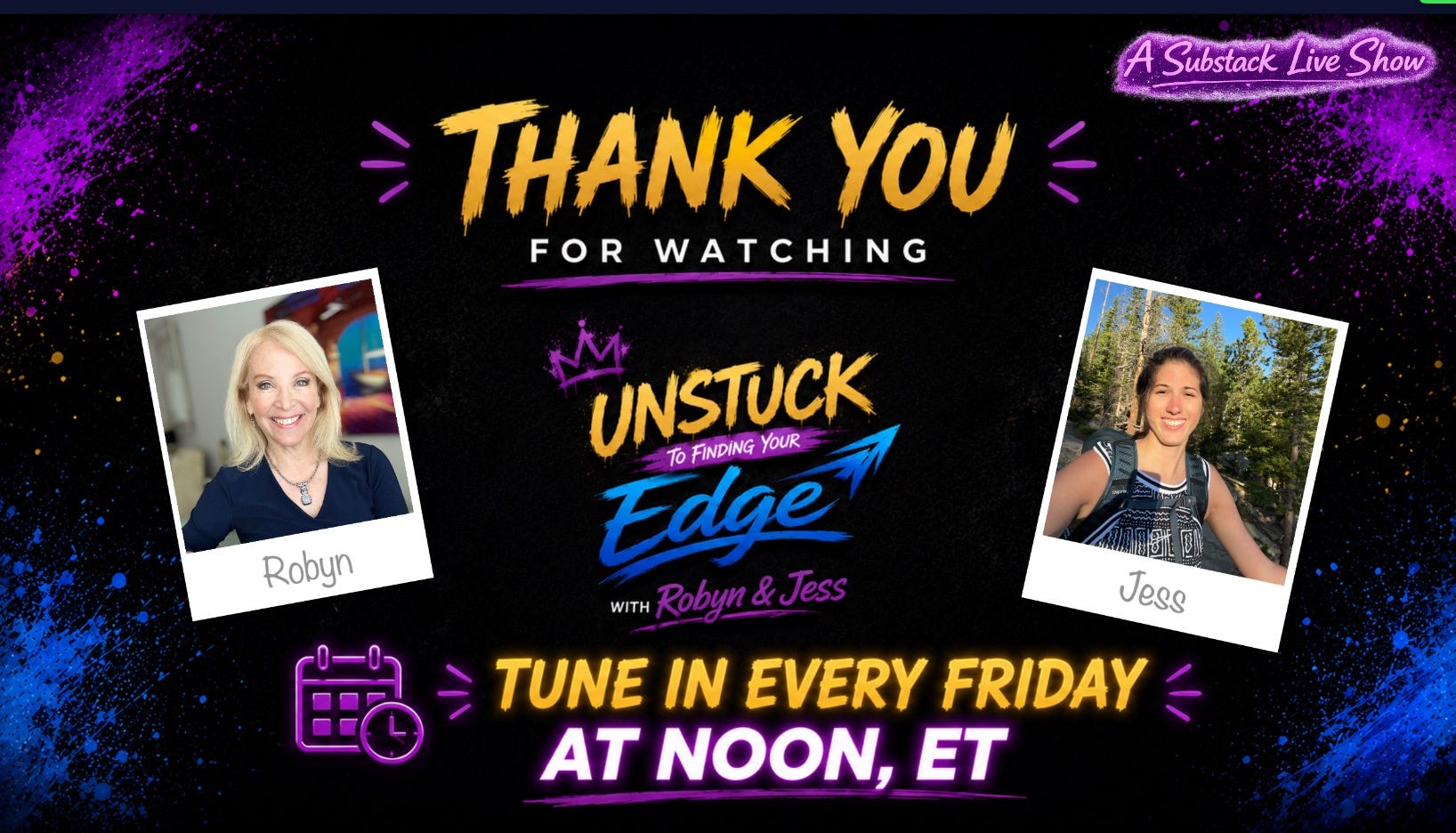
See you next Friday at 12pm ET for our weekly show, stay tuned!
-Jess, The Creator & Robyn Levin


