


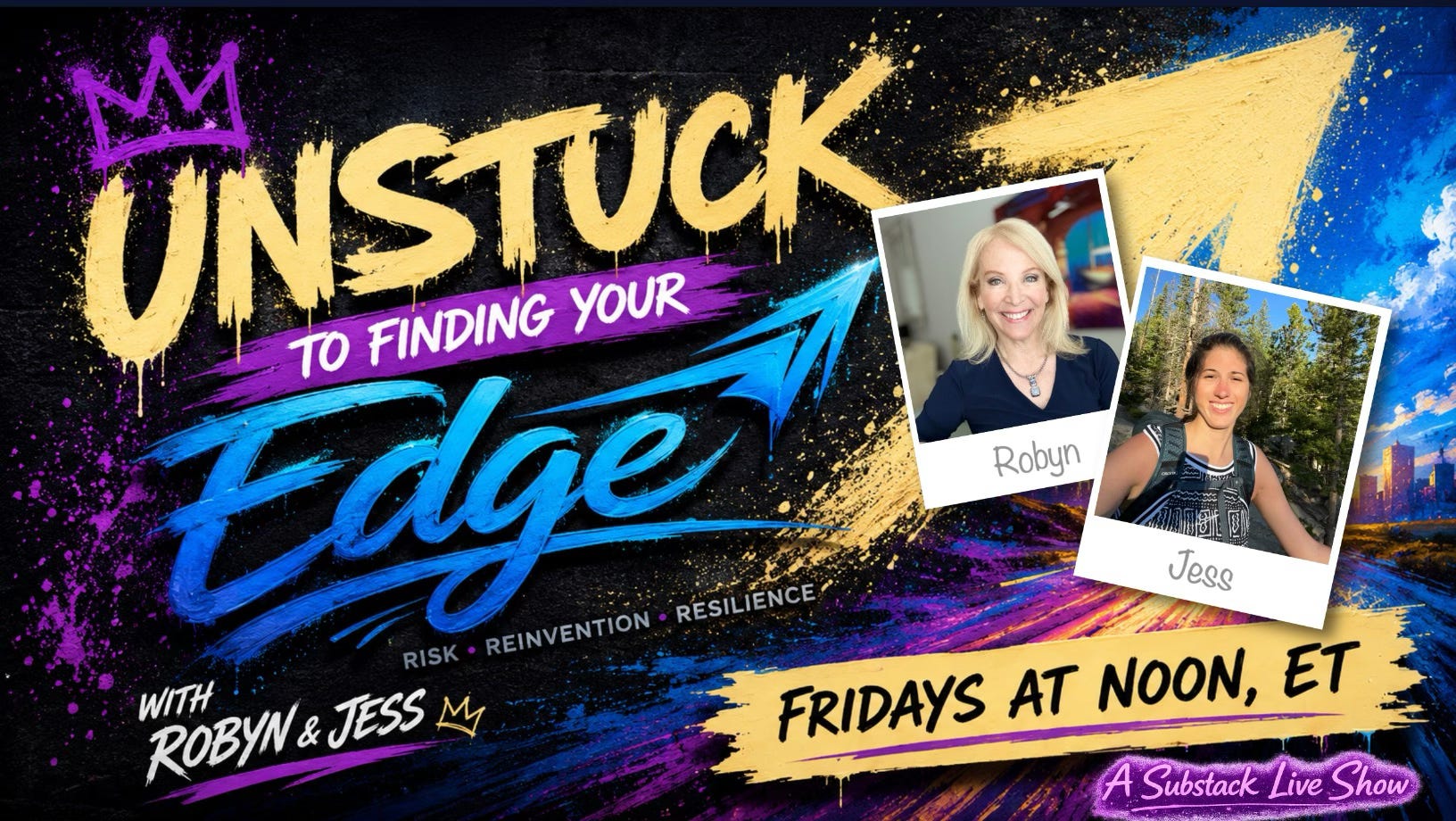
Editor’s Note: This article is based on Episode 018 of Unstuck to Finding Your Edge, my weekly Substack Live series with Robyn Levin. This week, we talked about something that should be simple, but has become surprisingly complicated: exercise. We shared how we actually move, what has remained sustainable over time, and why working out for longevity may be less about finding the perfect routine and more about building movement into your life.
Exercise has become complicated.
There are workout programs, gyms, trackers, supplements, recovery protocols, expensive equipment, and endless opinions about the “best” way to train.
Meanwhile, some of the most useful forms of movement remain incredibly simple.
Walk.
Carry something.
Climb a hill.
Do a squat.
Get outside.
Move your body.
During this week’s Live, Robyn and I realized that despite having very different routines, we share a similar philosophy:
→ Work with what you have and what you can do.
Because the workout that looks perfect on paper isn’t particularly useful if you can’t—or won’t—keep doing it.
Start With Walking
If you’re trying to become more active, you don’t necessarily need to begin with a workout program.
Start by walking.
Twenty minutes counts.
Thirty minutes counts.
Walking around your neighborhood counts.
Walking while traveling counts.
Robyn is a great example of what happens when movement becomes part of everyday life.
She doesn’t own a car, so walking isn’t always something she has to schedule as “exercise.” It’s simply how she gets places.
There’s an important lesson in that:
→ The more naturally movement fits into your life, the less motivation you need to make it happen.
You don’t have to replicate someone else’s routine. Find the version that works in yours.
Make Movement Progressively Harder
Once walking feels manageable, you don’t necessarily need to jump straight into running or an intense workout.
You can make the movement you’re already doing more challenging.
Walk → add incline → add weight → add time.
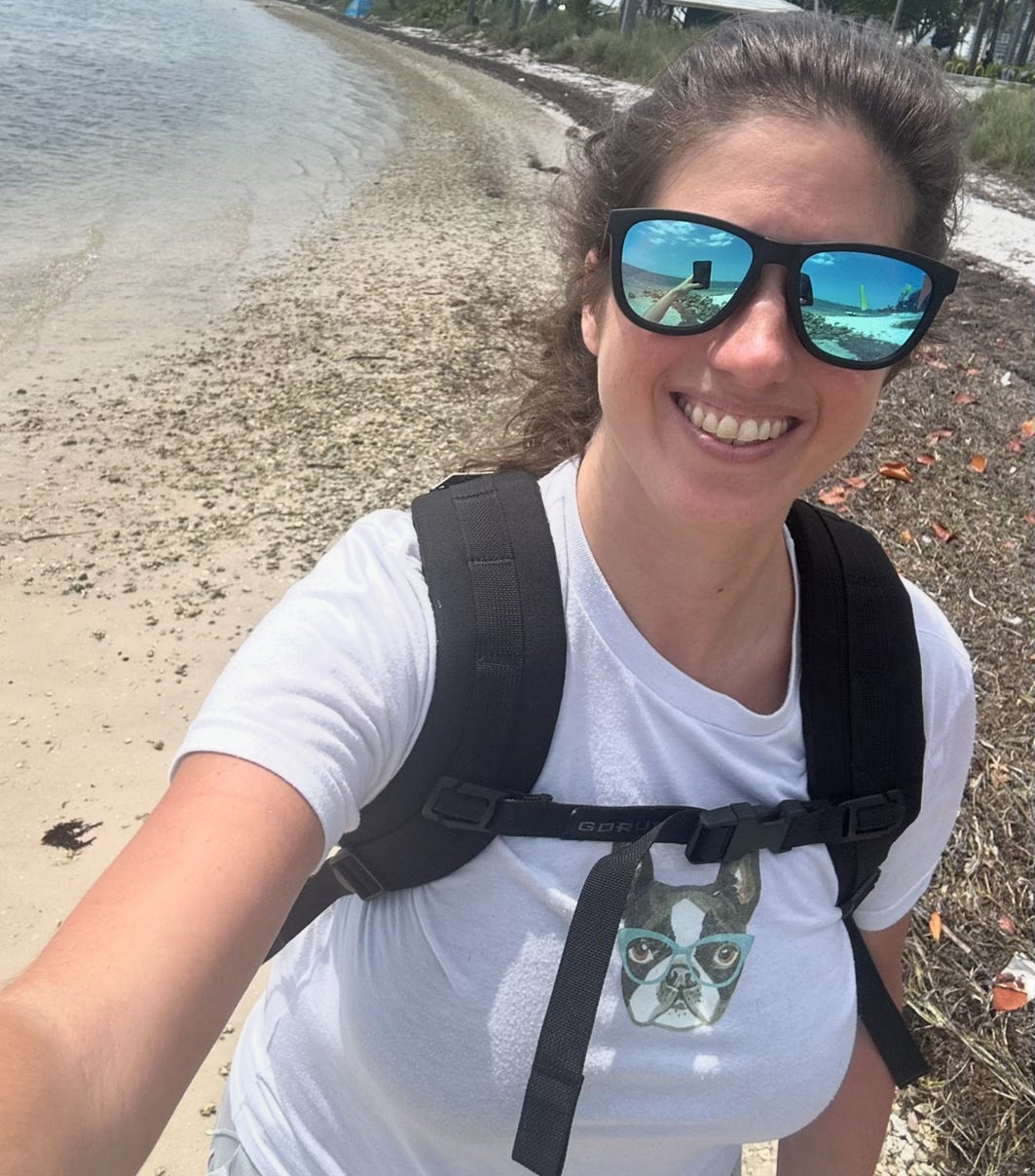
That’s one reason I’ve come to love rucking.
Rucking is essentially walking with weight.
I use a weighted backpack, which turns an ordinary walk into something more demanding without making the workout complicated and living in South Florida, I’ve had to get creative with incline.
We don’t exactly have mountains.
So I’ve used bridges, causeways, and even a local park built over an old landfill to create hills.
Is it glamorous?
No.
Does gravity know the difference?
Also no.
That’s the point.
Use what you have.
A bridge can become a hill.
Stairs can become your incline.
A backpack can add resistance.
A treadmill can mimic terrain you don’t have outside.
You don’t always need a different workout.
Sometimes you just need to make the movement you’re already doing a little harder.
Don’t Forget Strength
Walking is a wonderful foundation, but longevity isn’t only about cardiovascular exercise.
Strength matters too.
This was another big part of our conversation: maintaining muscle and continuing to challenge the body as we get older, and once again, it doesn’t have to be complicated.
Squats.
Push-ups or an assisted version.
Planks.
Lunges.
Bodyweight exercises.
Resistance training.
You can certainly use dumbbells, machines, or a gym if you enjoy them, but you don’t need all of that to begin.
As I said during the Live:
“All you really need is gravity and space.”
→ A hotel room can become a workout space, so can your living room, and so can your backyard.
The goal isn’t to build the most sophisticated strength routine.
The goal is to make strength a regular part of how you move.
Try The Health Stack
This was my favorite idea to come out of our conversation.
I realized that I’ve naturally started stacking health benefits into the same activity.
Take rucking outside.
I’m not only walking.
I’m walking with resistance, often on an incline, while getting sunlight, fresh air, and time outdoors.
Hiking does something similar.
You’re moving your body, challenging your cardiovascular system, navigating changing terrain, spending time in nature, getting away from your screens, and often decompressing mentally at the same time.
I think of this as a Health Stack.
Instead of always asking:
What’s the perfect workout?
Try asking:
How many useful things can I naturally combine?
Walk with a friend.
Take your workout outside.
Carry some weight on your walk.
Choose stairs instead of flat ground.
Go for a hike instead of spending another hour indoors.
→ Exercise doesn’t have to exist in a separate little box labeled fitness.
It can be part of how you socialize, travel, commute, spend time outside, or clear your head and when one activity gives you multiple reasons to enjoy it, it may become much easier to keep doing.
Stop Chasing The Perfect Workout
During the Live, Robyn and I also laughed about workout clothes.
Matching sets, expensive leggings, and special shoes.
The entire culture that can build up around fitness.
And if those things make you excited to exercise?
Great. Use them.
However, don’t confuse the accessories with the activity.
You don’t need the perfect outfit.
You don’t need an expensive gym membership.
You don’t need a wearable.
You don’t need an hour.
You don’t need to exercise exactly the way someone on the internet tells you to.
You need something you’ll actually do.
Some people love running and some hate it.
Some love the gym and others would rather hike, swim, cycle, walk, practice yoga, play a sport, or exercise at home.
That’s why Robyn and I kept coming back to the same idea throughout the episode:
→ Find what works for your body, your environment, and your life.
Then make it repeatable.
The Goal Is To Become Someone Who Moves
This is where I think exercise becomes much more interesting.
At first, working out can feel like another task.
I have to exercise today.
You schedule it, you negotiate with yourself, and you try to find motivation, but if you keep going long enough, something can change.
→ Movement becomes part of your routine. Then part of your lifestyle. Eventually, maybe even part of how you see yourself.
As I said during the Live:
“Once working out becomes part of your routine and part of your life and part of who you are... nothing really matters as long as you just get it done.”
That doesn’t mean every workout is great.
Some days you have 45 minutes.
Some days you walk.
Some days you lift.
Some days you do yoga.
Some days you have twenty minutes and that’s what you use.
→ It still counts.
Longevity isn’t built in one spectacular workout.
Longevity’s built through what you’re willing and able to return to.
So start where you are.
Use what you have.
Make it a little harder when you’re ready.
Add strength.
Stack the benefits when you can.
And above all, keep moving because eventually the goal isn’t to become someone who follows the perfect workout routine.
The goal is to become someone who moves.
In This Episode
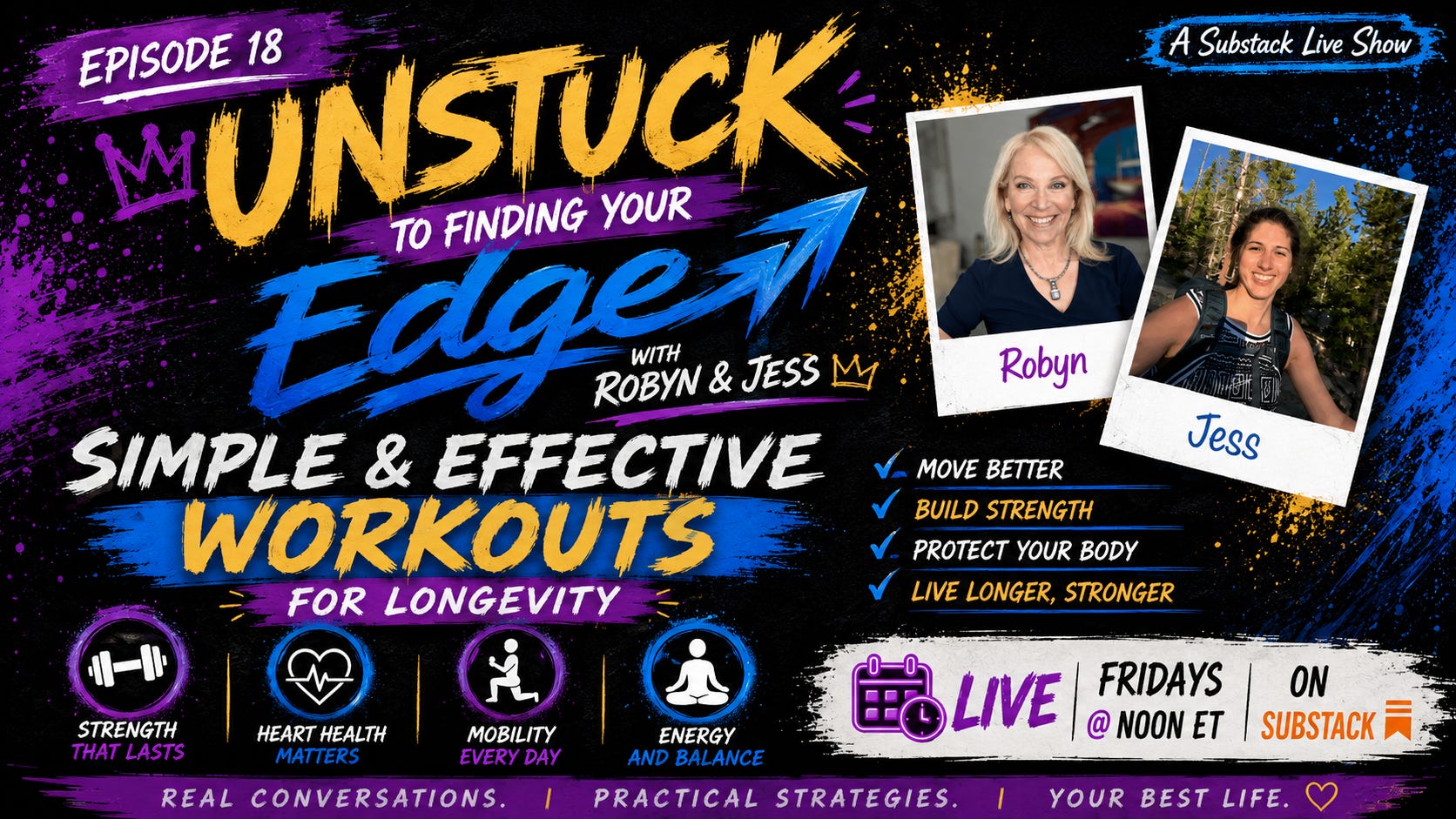
In Episode 018 of Unstuck to Finding Your Edge, Robyn and I share how we actually approach exercise from walking, yoga, strength training, and rucking to outdoor movement, sauna, cold exposure, and recovery.
We also talk about making fitness work while traveling, why exercise doesn’t require expensive equipment, and how our routines have evolved as we’ve gotten older.
↑ Replay Above
Resources From This Conversation
Important articles about movement, rucking, cold therapy, the sauna, and longevity →


Follow Jess at NP Fellow Become The CEO of Your Health →

Follow Jess at Nurse in the Market →
Follow Jess at Unstuck to Published →
Follow Robyn at Finding Your Edge →

Follow Robyn at Rare Finds - Luxury Travel →

Scan Robyn’s QR code to access her Youtube channel →

Thank You
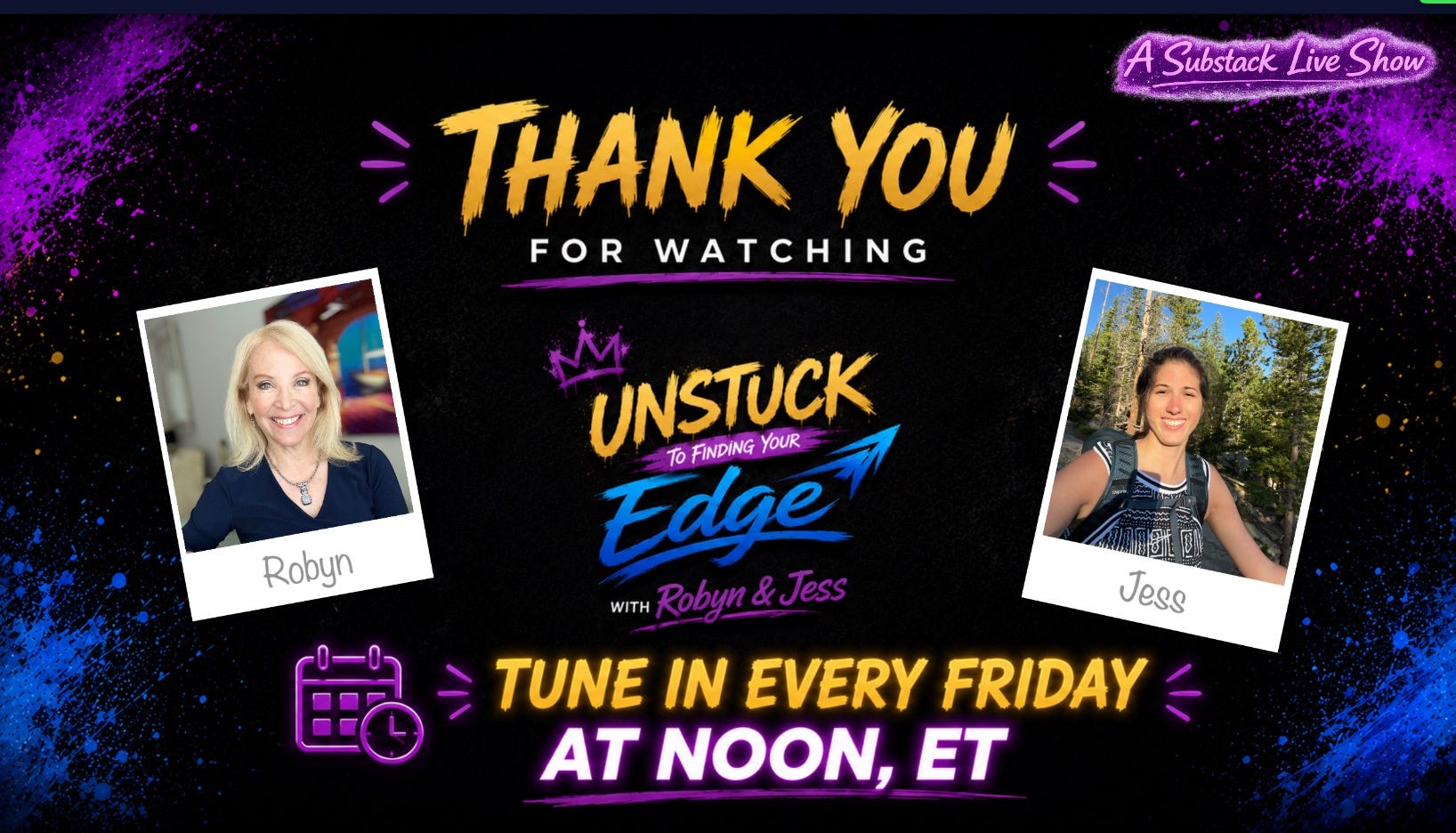
Thank you so much for everyone who tuned into this live, your presence is truly appreciated, and to the people who are watching the replay, thank you!
See you next Friday at 12pm ET for our weekly show, stay tuned!
-Jess, The Creator & Robyn Levin


